Early Warning Signs of Heart Failure You Shouldn’t Ignore
Heart failure announces itself quietly, in pillows, bathroom scales, and abandoned stairs. The early warning signs
Expert cardiology evaluation for breathlessness with activity, at rest, or when lying flat. Personalized testing and treatment based on your symptoms and heart function.
Shortness of breath can be difficult to describe and easy to explain away. It may feel like breathlessness with activity, an inability to take a full breath, tightness when breathing, or needing to stop and recover during tasks that used to be easy.
Although breathlessness often comes from the lungs, it is also one of the most common ways heart disease first appears. Gradual, unexplained, or worsening shortness of breath deserves careful evaluation rather than being attributed to age or fitness.
If you have been experiencing breathlessness with exertion, difficulty lying flat, swelling in the legs, unexplained fatigue, or ongoing symptoms following an emergency room visit, a cardiology evaluation can help determine whether your heart is contributing.
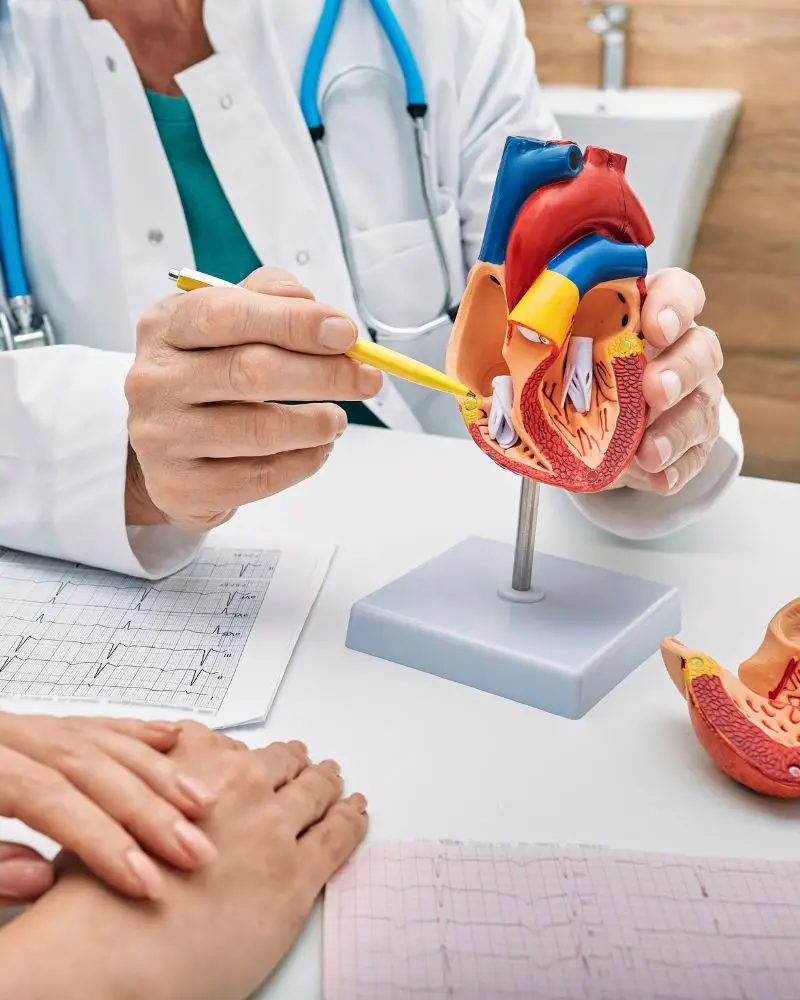



When you are concerned about breathlessness, knowing who will evaluate you matters. Our cardiologists assess each patient individually rather than relying on a single test result, and take the time to explain what is limiting your breathing and why.

General & Preventive Cardiology

Preventive & Non-Invasive Cardiology

Interventional & Vascular Cardiology
Treatment plans tailored to your symptoms, history, and individual needs.
Preventive, diagnostic, interventional, and vascular care in one practice.
Modern diagnostics for heart rhythm, function, structure, and blood flow.
Serving Pearland with additional locations expanding across Greater Houston.
Experienced physicians with advanced cardiovascular training and expertise.
We work with many leading insurance plans for convenient access to care.
Alliance Heart & Vascular is expanding to serve patients across Pearland, Greater Houston and surrounding communities.
Comprehensive cardiology, preventive cardiovascular care, diagnostic evaluation, and follow-up.
View Pearland LocationAlliance Heart & Vascular is expanding across Greater Houston and nearby communities, bringing convenient access to trusted cardiovascular care closer to where our patients live and work.
Alliance Heart & Vascular works with many major health insurance plans. Insurance participation can vary by plan, network, employer, and location.
Please call (346) 614-0002 before your appointment to verify your specific insurance benefits and network participation. Our team can help answer questions about scheduling, referrals, and insurance verification.
Some people delay seeing a cardiologist because breathlessness comes on gradually and is blamed on age, weight, or being out of shape. However, a declining ability to exert yourself is a meaningful cardiac symptom. A cardiology evaluation can help determine whether your heart is the cause.
Even when emergency testing is reassuring, breathlessness that limits your activity may require further outpatient cardiovascular evaluation.
Shortness of breath can occur alongside or be associated with several cardiovascular conditions. Learn more about:
If you have sudden or severe difficulty breathing, are gasping for air, or have breathlessness with chest pain or fainting, call 911 immediately.
Do not wait for an office appointment.
Online appointment requests should never be used for potentially life-threatening symptoms.
Many patients expect a heart problem to cause chest pain. Often the first sign is breathlessness instead. Heart-related shortness of breath can feel like:
The timing of breathlessness — with exertion, at rest, or when lying flat — provides important clues, but symptoms alone cannot separate a cardiac cause from a lung cause. That is why objective testing matters.
Breathlessness may come from the heart, the lungs, the blood, or overall conditioning. A cardiology evaluation helps determine whether reduced heart function, a valve problem, or a rhythm disturbance is responsible.
When the heart cannot pump or fill effectively, fluid can back up into the lungs, causing breathlessness with activity, difficulty lying flat, and swelling in the legs.
Narrowed coronary arteries can limit blood flow during exertion. In some patients breathlessness, rather than chest pain, is the main symptom.
A narrowed or leaking valve forces the heart to work harder and can produce breathlessness, fatigue, and reduced exercise tolerance.
A fast or irregular rhythm reduces the efficiency of each heartbeat and often causes breathlessness, fatigue, and palpitations.
Disease of the heart muscle itself can weaken or stiffen the heart and commonly presents as progressive shortness of breath.
High pressure in the lung arteries strains the right side of the heart and can cause breathlessness with exertion and swelling.
Yes. Many non-cardiac conditions cause breathlessness that closely resembles heart-related symptoms. Possible causes include:
Patients should not assume that gradual breathlessness is simply age, weight, or being out of shape without appropriate evaluation. Heart-related symptoms often develop slowly and are easy to adapt around.
Breathlessness can appear in different ways depending on the underlying cause. When it occurs is often as informative as how severe it feels, and helps determine which cardiac test is most useful.
Shortness of breath that appears reliably at a certain level of activity and eases with rest is a classic pattern of reduced cardiac reserve and warrants evaluation.
Needing extra pillows, or breathlessness that improves when you sit up, suggests fluid redistribution and is strongly associated with heart failure.
Sudden nighttime breathlessness that forces you to sit or stand up is an important symptom and should be evaluated promptly rather than monitored at home.
Shortness of breath together with leg, ankle, or abdominal swelling, or rapid weight gain over a few days, may indicate fluid retention from heart failure.
Heart disease may present as breathlessness and fatigue rather than chest pain, particularly in women, older adults, and patients with diabetes.
Not every patient needs every cardiac test. Testing should be selected based on your symptoms, examination, medical history, and cardiovascular risk. Depending on your individual situation, your cardiologist may recommend one or more of the following.
Measures the heart's electrical activity and may identify rhythm problems or other cardiac changes.
Uses ultrasound to evaluate heart function, chambers, valves, muscle, and structure.
Shows how the heart responds to physical activity and may help evaluate exercise-related symptoms.
Uses cardiac imaging during stress testing to assess blood flow to the heart muscle.
Records heart rhythm over time to help detect intermittent arrhythmias or palpitations.
Blood tests may evaluate cholesterol, blood sugar, kidney function, and other cardiovascular risk factors.
Certain patients may require additional cardiac imaging or coronary evaluation depending on their symptoms and risk profile. Your cardiologist will explain why a particular test is being recommended and how the results may influence your treatment plan.
Treatment depends on what is causing the breathlessness. When a cardiac cause is identified, the goal is to improve how well your heart pumps, control fluid, and restore your ability to exert yourself. Treatment may include:
Our objective is not simply to relieve the symptom. We want to identify why your heart is struggling, protect heart function, and restore your ability to do the things you want to do.

This is a common reason patients schedule an appointment with a cardiologist. Emergency departments are designed to identify and treat immediate danger. Once urgent causes have been excluded, the reason for ongoing breathlessness may still need outpatient evaluation.
You may benefit from additional evaluation if you continue experiencing:
Talk to our office — Monday to Friday, 8:00 a.m. to 4:30 p.m.
Call (346) 614-0002Breathlessness that limits your activity should not be ignored.
Whether you are experiencing breathlessness climbing stairs, difficulty lying flat, swelling with fatigue, ongoing symptoms after an emergency room visit, or concerns about heart failure, our cardiologists can help identify the cause and guide treatment.
New patients are welcome.
Serving patients throughout Pearland, Greater Houston, and surrounding areas.