
Early Warning Signs of Heart Failure You Shouldn’t Ignore
Heart failure announces itself quietly, in pillows, bathroom scales, and abandoned stairs. The early warning signs
A quick, painless recording of your heart's electrical activity — usually the first test performed when heart symptoms are being assessed.
An electrocardiogram, written as EKG or ECG, records the electrical signals that make your heart beat. Small adhesive electrodes are placed on the chest, arms, and legs, and the tracing takes only a few seconds to capture.
It is painless, involves no radiation, and nothing is passed into the body. The electrodes only listen — they do not deliver any current.
The EKG is the starting point for most cardiac assessment because it is quick and highly informative. Its main limitation is that it captures only a few seconds, so intermittent problems can be missed entirely.




An EKG is only as useful as its interpretation. Our cardiologists read your tracing themselves, compare it with any previous recordings, and explain what it means alongside your symptoms.

General & Preventive Cardiology

Preventive & Non-Invasive Cardiology

Interventional & Vascular Cardiology
Treatment plans tailored to your symptoms, history, and individual needs.
Preventive, diagnostic, interventional, and vascular care in one practice.
Modern diagnostics for heart rhythm, function, structure, and blood flow.
Serving Pearland with additional locations expanding across Greater Houston.
Experienced physicians with advanced cardiovascular training and expertise.
We work with many leading insurance plans for convenient access to care.
Alliance Heart & Vascular is expanding to serve patients across Pearland, Greater Houston and surrounding communities.
Comprehensive cardiology, preventive cardiovascular care, diagnostic evaluation, and follow-up.
View Pearland LocationAlliance Heart & Vascular is expanding across Greater Houston and nearby communities, bringing convenient access to trusted cardiovascular care closer to where our patients live and work.
Alliance Heart & Vascular works with many major health insurance plans. Insurance participation can vary by plan, network, employer, and location.
Please call (346) 614-0002 before your appointment to verify your specific insurance benefits and network participation. Our team can help answer questions about scheduling, referrals, and insurance verification.
An EKG is performed at the first consultation for most cardiac symptoms, and repeated whenever something changes. Common reasons include:
Because the recording lasts only seconds, a normal EKG does not exclude a rhythm problem that comes and goes. Intermittent symptoms usually need longer monitoring instead.
EKG testing contributes to the diagnosis of several cardiovascular conditions. Learn more about:
An EKG is a scheduled test, not an emergency service. If you have severe chest pain, sudden breathlessness, or fainting, call 911 immediately.
Do not wait for an office appointment.
Online appointment requests should never be used for potentially life-threatening symptoms.
The EKG is excellent at some things and blind to others. Knowing which is which prevents a normal result being over-interpreted:
This is why an EKG is usually a first test rather than a final one. An echocardiogram, stress test, or monitor is added when the question needs one.
Each part of the tracing corresponds to a stage of the heartbeat, and abnormalities in specific segments point to specific problems.
Whether the beat is regular, where each beat originates, and whether the rate is appropriate. This is how atrial fibrillation is confirmed.
Scarred heart muscle leaves a permanent signature on the tracing, which can reveal a heart attack a patient never knew they had.
Changes in specific segments can indicate that heart muscle is not receiving enough blood right now, which is a medical emergency.
Delays in the electrical pathway, including bundle branch block and heart block, which sometimes indicate a need for a pacemaker.
Thickened or enlarged chambers, often reflecting long-standing high blood pressure or valve disease.
Abnormal potassium or calcium levels and certain medications alter the tracing in recognizable ways.
An EKG needs almost no preparation. A few small things make the recording cleaner:
Do not stop any cardiac medication before an EKG. Part of the value of the test is seeing what your heart does on your current treatment.
The EKG contributes to the diagnosis of most cardiac conditions, and is definitive for several rhythm problems.
An EKG during an episode confirms atrial fibrillation definitively, which matters because it changes stroke prevention. Read more about atrial fibrillation.
Extra beats, conduction block, and abnormal rhythms are identified directly from the tracing. Read more about arrhythmias.
The EKG can show previous damage and active ischemia, though a normal tracing does not exclude narrowing. Read more about coronary artery disease.
When palpitations are present during the recording, the EKG identifies the rhythm immediately. Read more about heart palpitations.
Chamber enlargement and conduction delay support the diagnosis, though an echocardiogram is needed to measure function. Read more about heart failure.
Not every patient needs every cardiac test. Testing should be selected based on your symptoms, examination, medical history, and cardiovascular risk. Depending on your individual situation, your cardiologist may recommend one or more of the following.
Measures the heart's electrical activity and may identify rhythm problems or other cardiac changes.
Uses ultrasound to evaluate heart function, chambers, valves, muscle, and structure.
Shows how the heart responds to physical activity and may help evaluate exercise-related symptoms.
Uses cardiac imaging during stress testing to assess blood flow to the heart muscle.
Records heart rhythm over time to help detect intermittent arrhythmias or palpitations.
Blood tests may evaluate cholesterol, blood sugar, kidney function, and other cardiovascular risk factors.
Certain patients may require additional cardiac imaging or coronary evaluation depending on their symptoms and risk profile. Your cardiologist will explain why a particular test is being recommended and how the results may influence your treatment plan.
The tracing is reviewed by your cardiologist during the same visit wherever possible, and what happens next depends on what it shows. That may include:
A normal EKG is genuinely reassuring for some questions and irrelevant to others. Your cardiologist will tell you which of those applies to your symptoms.
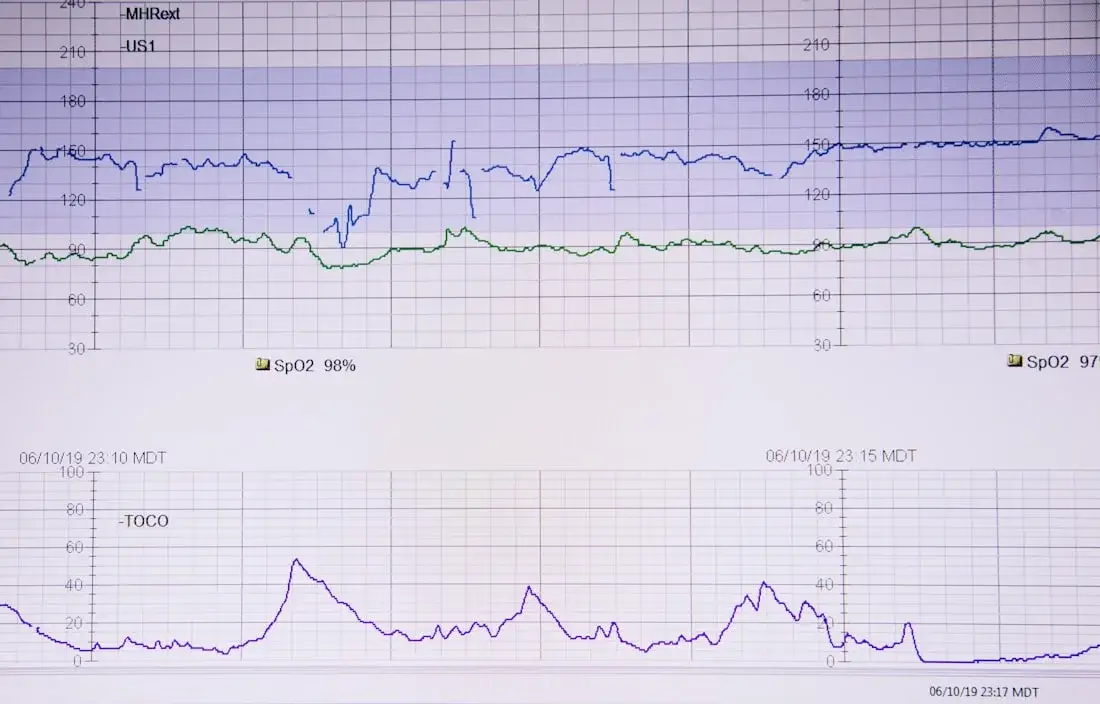
Abnormal EKGs are frequently found at routine checks, insurance screenings, and preoperative assessments, in patients with no symptoms at all. Many of these findings are benign variants, but they should be interpreted by a cardiologist rather than left unexplained.
An appointment is worthwhile if you have:
Talk to our office — Monday to Friday, 8:00 a.m. to 4:30 p.m.
Call (346) 614-0002A few seconds of recording can answer a great deal.
Whether you have been referred for an EKG, have been told a previous tracing was abnormal, or have symptoms that have not been explained, we perform and interpret EKGs on site at both Houston locations.
New patients are welcome.
Serving patients throughout Pearland, Greater Houston, and surrounding areas.