
Early Warning Signs of Heart Failure You Shouldn’t Ignore
Heart failure announces itself quietly, in pillows, bathroom scales, and abandoned stairs. The early warning signs
Continuous rhythm recording over hours to weeks — to capture palpitations, dizziness, or blackouts as they actually happen.
A heart monitor is a small recorder worn on the chest that captures every heartbeat continuously while you go about your normal life. Unlike an EKG, which records a few seconds, a monitor records for days or weeks.
This matters because the most useful information in rhythm problems is what your heart is doing at the exact moment you feel a symptom. If the episode has passed by the time you reach a clinic, that information is simply gone.
Monitoring is the definitive test for intermittent palpitations, unexplained dizziness, and suspected atrial fibrillation. It is painless, and you carry on with normal activity throughout.
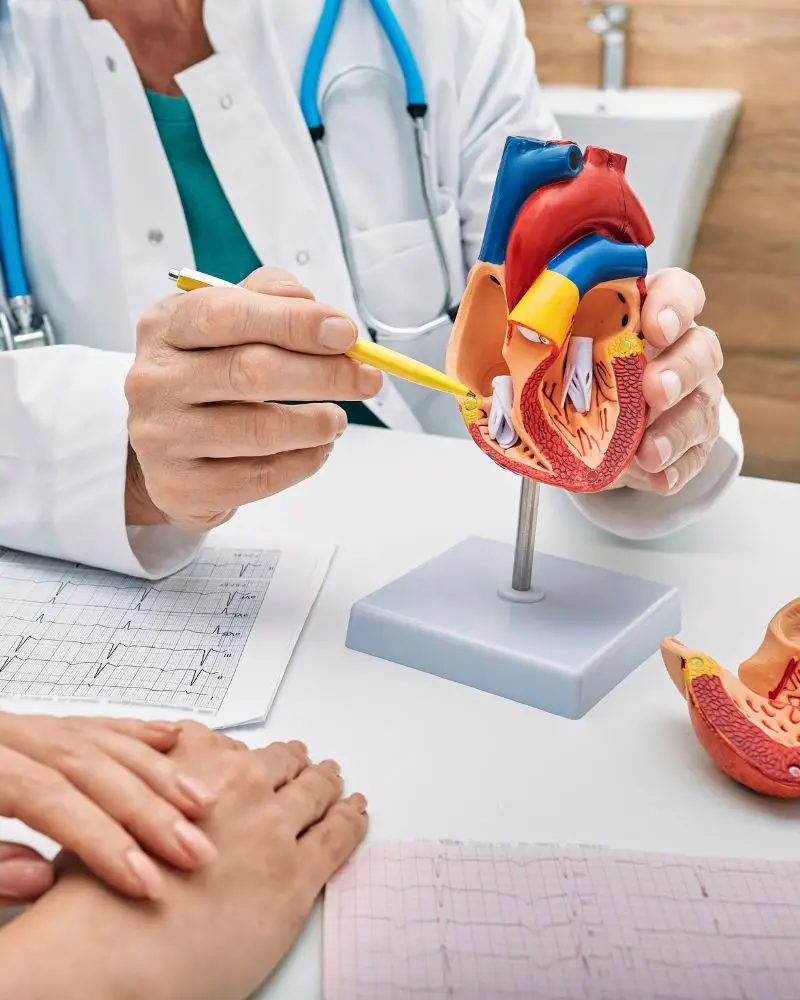



Monitoring produces days of data, and its value is in the correlation. Our cardiologists review the recording against your symptom diary and explain what your heart was doing at the moment you felt something.

General & Preventive Cardiology

Preventive & Non-Invasive Cardiology

Interventional & Vascular Cardiology
Treatment plans tailored to your symptoms, history, and individual needs.
Preventive, diagnostic, interventional, and vascular care in one practice.
Modern diagnostics for heart rhythm, function, structure, and blood flow.
Serving Pearland with additional locations expanding across Greater Houston.
Experienced physicians with advanced cardiovascular training and expertise.
We work with many leading insurance plans for convenient access to care.
Alliance Heart & Vascular is expanding to serve patients across Pearland, Greater Houston and surrounding communities.
Comprehensive cardiology, preventive cardiovascular care, diagnostic evaluation, and follow-up.
View Pearland LocationAlliance Heart & Vascular is expanding across Greater Houston and nearby communities, bringing convenient access to trusted cardiovascular care closer to where our patients live and work.
Alliance Heart & Vascular works with many major health insurance plans. Insurance participation can vary by plan, network, employer, and location.
Please call (346) 614-0002 before your appointment to verify your specific insurance benefits and network participation. Our team can help answer questions about scheduling, referrals, and insurance verification.
Monitoring is arranged whenever symptoms come and go, or when a rhythm needs quantifying rather than simply identifying. Common reasons include:
The single most valuable outcome is a recording taken while you were feeling your symptom. That correlation is what turns a monitor from a data collection exercise into a diagnosis.
Heart monitoring is central to diagnosing several rhythm conditions. Learn more about:
A monitor records — it does not alert anyone in real time. If you develop severe chest pain, fainting, or severe breathlessness while wearing one, call 911 immediately.
Do not wait for an office appointment.
Online appointment requests should never be used for potentially life-threatening symptoms.
The right monitor depends entirely on how often your symptoms occur. Wearing one for too short a period is the most common reason monitoring fails to find an answer:
If your palpitations happen once a month, a 24-hour Holter is very unlikely to capture them. Matching the monitoring period to your symptom frequency is the whole art of ordering this test.
A monitor answers questions an EKG cannot, because it is present for the episode rather than sampling a random few seconds.
Confirms intermittent AF that a resting EKG will miss, and measures how much of the time you are in it — which informs stroke prevention.
Captures the abrupt start and stop of SVT episodes, which is the pattern that distinguishes it from other fast rhythms.
Counts extra beats and expresses them as a percentage of the total. A high burden occasionally affects heart function and changes management.
Identifies significant pauses or heart block, particularly overnight, which is often what determines whether a pacemaker is needed.
Matches your diary entries against the recording, establishing whether your symptom coincided with an abnormal rhythm or a normal one.
In known atrial fibrillation, shows whether medication is controlling the rate across the whole day, including during activity and sleep.
The monitor only produces a diagnosis if you carry on normally and record what you feel. Please:
A monitor with no symptom diary is far less useful. Noting the time you felt something is what allows us to look at that exact moment in the recording and say whether the rhythm was responsible.
Ambulatory monitoring is the definitive test for intermittent rhythm problems, which are among the hardest cardiac conditions to catch.
The most common reason for monitoring, since palpitations almost always stop before any recording can be made in clinic. Read more about heart palpitations.
Confirms intermittent AF and quantifies how much of the time it is present, which affects stroke prevention decisions. Read more about atrial fibrillation.
Names the specific rhythm behind your symptoms, which is what determines whether treatment is needed at all. Read more about arrhythmias.
Identifies pauses, slow rhythms, or fast rhythms occurring at the moment of dizziness or near-fainting. Read more about shortness of breath.
A persistently fast rhythm worsens heart function, and monitoring shows whether rate control is adequate across the day. Read more about heart failure.
Not every patient needs every cardiac test. Testing should be selected based on your symptoms, examination, medical history, and cardiovascular risk. Depending on your individual situation, your cardiologist may recommend one or more of the following.
Measures the heart's electrical activity and may identify rhythm problems or other cardiac changes.
Uses ultrasound to evaluate heart function, chambers, valves, muscle, and structure.
Shows how the heart responds to physical activity and may help evaluate exercise-related symptoms.
Uses cardiac imaging during stress testing to assess blood flow to the heart muscle.
Records heart rhythm over time to help detect intermittent arrhythmias or palpitations.
Blood tests may evaluate cholesterol, blood sugar, kidney function, and other cardiovascular risk factors.
Certain patients may require additional cardiac imaging or coronary evaluation depending on their symptoms and risk profile. Your cardiologist will explain why a particular test is being recommended and how the results may influence your treatment plan.
The full recording is analyzed and compared against your symptom diary. What follows depends on what was captured and whether it coincided with your symptoms:
A monitor that records a normal rhythm during your symptoms is a genuinely valuable result. It rules the heart out with confidence, which is often exactly what a patient needs to hear.

This is the single most common frustration in rhythm problems. Patients attend an emergency department with a racing heart, wait, and by the time an EKG is taken the rhythm has returned to normal. The episode was real, but the evidence has gone.
Monitoring is appropriate if you have:
Talk to our office — Monday to Friday, 8:00 a.m. to 4:30 p.m.
Call (346) 614-0002The rhythm during your symptom is the answer.
Whether you have palpitations that stop before they can be recorded, unexplained dizziness, an alert from a wearable device, or known atrial fibrillation needing assessment, we arrange and interpret heart monitoring on site.
New patients are welcome.
Serving patients throughout Pearland, Greater Houston, and surrounding areas.