Early Warning Signs of Heart Failure You Shouldn’t Ignore
Heart failure announces itself quietly, in pillows, bathroom scales, and abandoned stairs. The early warning signs
Painless ultrasound of the arteries and veins in the neck, legs, and abdomen — assessing blood flow outside the heart.
Vascular ultrasound uses sound waves to image the blood vessels and measure the flow through them. Gel is applied to the skin and a probe is moved over the area being examined.
It is painless, involves no radiation and no injections, and gives an immediate picture of whether a vessel is narrowed, blocked, enlarged, or leaking.
Because the same plaque that narrows coronary arteries affects vessels throughout the body, a vascular study is also a window onto your overall cardiovascular risk.
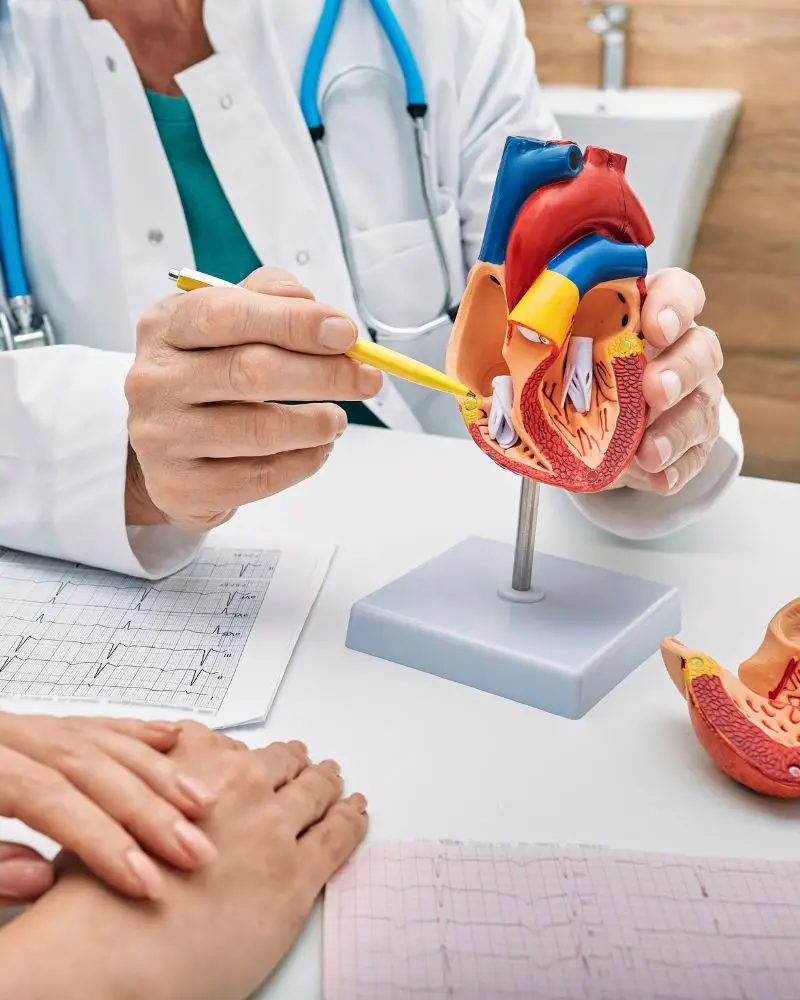



A vascular finding matters well beyond the vessel scanned. Our cardiologists interpret your study in the context of your whole cardiovascular risk, because narrowing in one place rarely stays in one place.

General & Preventive Cardiology

Preventive & Non-Invasive Cardiology

Interventional & Vascular Cardiology
Treatment plans tailored to your symptoms, history, and individual needs.
Preventive, diagnostic, interventional, and vascular care in one practice.
Modern diagnostics for heart rhythm, function, structure, and blood flow.
Serving Pearland with additional locations expanding across Greater Houston.
Experienced physicians with advanced cardiovascular training and expertise.
We work with many leading insurance plans for convenient access to care.
Alliance Heart & Vascular is expanding to serve patients across Pearland, Greater Houston and surrounding communities.
Comprehensive cardiology, preventive cardiovascular care, diagnostic evaluation, and follow-up.
View Pearland LocationAlliance Heart & Vascular is expanding across Greater Houston and nearby communities, bringing convenient access to trusted cardiovascular care closer to where our patients live and work.
Alliance Heart & Vascular works with many major health insurance plans. Insurance participation can vary by plan, network, employer, and location.
Please call (346) 614-0002 before your appointment to verify your specific insurance benefits and network participation. Our team can help answer questions about scheduling, referrals, and insurance verification.
Vascular ultrasound is arranged for symptoms in the limbs or neck, and for screening in patients at risk. Common reasons include:
Narrowing found in one arterial bed substantially raises the likelihood of narrowing in another, so a vascular study frequently changes how aggressively cardiac risk is treated.
Vascular findings connect to several cardiovascular conditions. Learn more about:
If a limb becomes suddenly cold, pale, numb, or severely painful, or you develop stroke symptoms, call 911 immediately rather than waiting for a scan.
Do not wait for an office appointment.
Online appointment requests should never be used for potentially life-threatening symptoms.
Different studies target different vessels, and the one arranged depends on your symptoms:
The ankle-brachial index is quick and remarkably informative: comparing the blood pressure at your ankle with that in your arm gives an immediate indication of arterial narrowing in the leg.
A single study can identify several distinct problems, and distinguishing between them is much of its clinical value.
Narrowing in the leg arteries causing pain on walking, and in advanced cases poor healing. Severity is graded to guide treatment.
Plaque in the neck arteries supplying the brain, graded by severity, which determines whether medical treatment or intervention is appropriate.
A clot within a deep vein, usually in the leg. This is a time-sensitive finding and changes management immediately.
Valves within the veins failing to close properly, allowing blood to pool. This causes swelling, aching, and varicose veins.
Enlargement of the main abdominal artery, usually silent. Screening identifies it, and the diameter determines the follow-up interval.
Whether a previous bypass graft or stent remains open, which is why surveillance scanning is arranged after vascular intervention.
Most vascular scans need no preparation at all. Where preparation is required, our team will tell you in advance:
If you have a wound on your foot or leg, mention it when booking and leave it accessible. Our team will want to examine it alongside the scan, since healing depends directly on blood supply.
Vascular disease is rarely confined to one place. A positive finding in the legs or neck is a strong signal about the heart as well.
Plaque in the legs and neck is driven by the same raised LDL that narrows coronary arteries, and responds to the same treatment. Read more about high cholesterol.
Patients with peripheral artery disease have a markedly higher risk of coronary disease, often without any chest symptoms. Read more about coronary artery disease.
Sustained pressure damages the artery lining throughout the body, and renal artery narrowing can itself cause resistant hypertension. Read more about high blood pressure.
Carotid narrowing is a direct stroke risk, and identifying it allows treatment before any event occurs.
Where a stroke has occurred without an obvious cause, carotid imaging and rhythm monitoring are often arranged together. Read more about atrial fibrillation.
Not every patient needs every cardiac test. Testing should be selected based on your symptoms, examination, medical history, and cardiovascular risk. Depending on your individual situation, your cardiologist may recommend one or more of the following.
Measures the heart's electrical activity and may identify rhythm problems or other cardiac changes.
Uses ultrasound to evaluate heart function, chambers, valves, muscle, and structure.
Shows how the heart responds to physical activity and may help evaluate exercise-related symptoms.
Uses cardiac imaging during stress testing to assess blood flow to the heart muscle.
Records heart rhythm over time to help detect intermittent arrhythmias or palpitations.
Blood tests may evaluate cholesterol, blood sugar, kidney function, and other cardiovascular risk factors.
Certain patients may require additional cardiac imaging or coronary evaluation depending on their symptoms and risk profile. Your cardiologist will explain why a particular test is being recommended and how the results may influence your treatment plan.
Findings are interpreted alongside your symptoms and examination, and almost always prompt attention to your wider cardiovascular risk as well as the vessel itself:
Most vascular narrowing is treated medically, with exercise and risk factor control doing more than patients expect. Procedures are added when symptoms limit you or a limb is threatened.
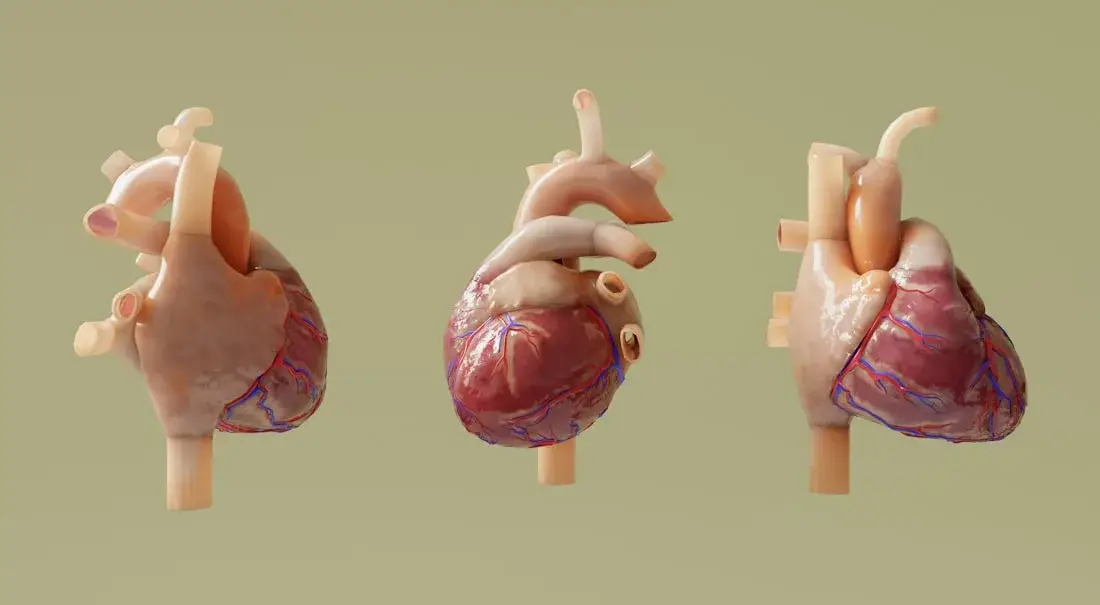
Vascular narrowing is often picked up incidentally — on a scan arranged for something else, during diabetic foot screening, or from a sound heard in the neck at a routine appointment. A finding without a plan helps nobody.
A scan and assessment are appropriate if you have:
Talk to our office — Monday to Friday, 8:00 a.m. to 4:30 p.m.
Call (346) 614-0002Circulation problems are easy to check and easy to miss.
Whether you have leg pain on walking, a wound that will not heal, swelling, a sound heard in your neck, or an aneurysm that needs monitoring, we perform and interpret vascular ultrasound on site at both Houston locations.
New patients are welcome.
Serving patients throughout Pearland, Greater Houston, and surrounding areas.