
Why can exercise cause chest pain from a blocked artery?
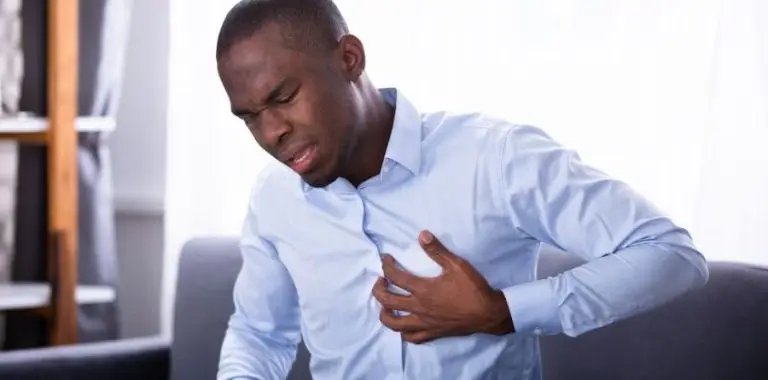
Exercise can cause chest pain from a blocked artery because hard effort multiplies the heart’s need for oxygen. A healthy coronary artery widens to keep up, but one narrowed by plaque cannot. The heart muscle runs short of oxygen and produces pressure or tightness, called exertional angina, that usually fades within minutes of stopping.
The coronary arteries are the blood vessels that feed the heart muscle. Plaque is a fatty, waxy buildup that narrows them over time. Here is why exercise uncovers a problem that rest can hide:
- Demand rises fast: during a run, a spin class, or heavy lifting, heart rate and blood pressure climb and the heart needs several times more oxygen than at rest.
- Supply hits a ceiling: a narrowed artery may deliver enough blood at rest but cannot widen enough to meet peak demand.
- The muscle signals distress: Ischemia is heart muscle that is not getting enough oxygen-rich blood. It causes the pressure, tightness, or breathlessness of angina.
- Symptoms track the workload: the discomfort tends to start at a similar intensity, such as the same hill or pace, and ease once you slow down.
Angina is chest pain or discomfort caused by reduced blood flow to the heart muscle. Exertional angina is angina triggered by physical activity, and its most common cause is coronary artery disease. Because the symptom follows effort so closely, this pattern earns testing rather than reassurance.
Alliance Heart & Vascular
Expert heart care that keeps you moving.
Three board-certified cardiologists work as one team to find the cause of exercise chest pain and help you return to the activities you enjoy, safely.
- Dr. Rizwan KhanMD, FACC
- Dr. Muhammad Waheed RajaMD, FACC, FASE
- Dr. Afaq MotiwalaMD, FACC, RPVI
Can fit, active people have blocked heart arteries?
Yes. Regular exercise lowers heart disease risk, but it does not erase the effects of age, genetics, high cholesterol, high blood pressure, diabetes, or past smoking. Runners, cyclists, and gym regulars can still develop plaque in their heart arteries. Being fit can even delay symptoms until a blockage is advanced, so new chest pain deserves attention.
Active people often explain away chest symptoms as a bad training day. These factors keep heart disease possible even in excellent shape:
- Family history: a parent or sibling with early heart disease (men before 55, women before 65) raises your risk regardless of fitness.
- Cholesterol: inherited high LDL cholesterol can build plaque in lean, active people. See our high cholesterol page.
- Lipoprotein(a): Lipoprotein(a) is an inherited type of cholesterol particle that raises heart disease risk and is not lowered by exercise. A single blood test measures it.
- Blood pressure and diabetes: high blood pressure and diabetes damage artery walls over time, even in people who train.
- Past smoking: years of earlier tobacco use leave lasting changes in the arteries.
- Age: risk climbs steadily after 40 in men and after menopause in women.
Fitness is still one of the best things you can do for your heart. The point is not to stop exercising, but to take new symptoms seriously rather than training through them.
How can you tell heart pain from other exercise chest pain?
Heart-related exercise chest pain usually feels like central pressure or tightness that builds with effort, may spread to the arm, jaw, or back, and fades within minutes of rest. Muscle strain is sharp and sore to the touch. Exercise-induced asthma causes wheezing and cough. Reflux causes burning linked to meals or bending.
| Cause | Typical feeling | Clues |
|---|---|---|
| Exertional angina | Pressure, tightness, heaviness in the center of the chest | Starts at a predictable effort, may spread to arm, jaw, or back, eases within minutes of rest |
| Muscle or rib strain | Sharp, localized soreness | Worse when you press on the spot, twist, or lift; often follows a new or heavy workout |
| Exercise-induced bronchoconstriction | Chest tightness with wheeze or cough | Often peaks shortly after exercise; cold, dry air makes it worse |
| Reflux | Burning behind the breastbone | More likely after eating before a workout, or with bending and crunches |
| Costochondritis | Sharp pain at the breastbone edge | Tender to the touch; lingers at rest |
- Exercise-induced bronchoconstriction: Exercise-induced bronchoconstriction is a temporary narrowing of the airways during or after exercise. It feels more like trouble moving air than a weight on the chest.
- Costochondritis: Costochondritis is inflammation of the cartilage that joins the ribs to the breastbone. It causes sharp pain you can reproduce by pressing on it.
- The cost of guessing: mistaking angina for a pulled muscle carries far higher stakes than the reverse, so a cardiac pattern should be tested, not assumed away.
A useful rule: pain that reliably comes with effort and leaves with rest needs a heart evaluation, even if it is mild. Our chest pain page covers other causes in more detail.
What other heart problems cause chest pain during exercise?
Besides blocked arteries, exercise chest pain can come from hypertrophic cardiomyopathy, a narrowed aortic valve, heart rhythm problems, myocarditis, or, rarely, a coronary artery that formed in an unusual position. In younger athletes, these structural and electrical problems are more common causes than plaque. Chest pain, fainting, or palpitations during exercise always need evaluation.
- Hypertrophic cardiomyopathy: Hypertrophic cardiomyopathy (HCM) is an inherited condition in which the heart muscle becomes abnormally thick. It can cause chest pain, breathlessness, and fainting during exercise, and an echocardiogram usually detects it.
- Aortic stenosis: Aortic stenosis is a narrowing of the valve through which blood leaves the heart. It can cause chest pain, dizziness, or fainting with effort.
- Arrhythmias: An arrhythmia is a heartbeat that is too fast, too slow, or irregular. A racing heart during exercise can cause chest discomfort and lightheadedness. Endurance athletes also have a higher rate of atrial fibrillation.
- Myocarditis: Myocarditis is inflammation of the heart muscle, often after a viral infection. Exercising hard while it is active can be dangerous, so chest pain after a recent illness needs a check before training resumes.
- Coronary microvascular disease: Coronary microvascular disease is a problem in the heart’s tiny blood vessels. It can cause angina with effort even when the large arteries look open.
- Anomalous coronary artery: an anomalous coronary artery is a heart artery that formed in an unusual position at birth. It is rare but can cause chest pain or fainting during intense exercise in young people.
When is chest pain during exercise an emergency?
Chest pain during exercise is an emergency when it is severe, does not ease within a few minutes of stopping, or comes with fainting, sweating, nausea, severe shortness of breath, or a racing or irregular heartbeat. Stop immediately and call 911. If someone collapses, start CPR and use an AED if one is nearby.
Stop exercising and call 911 if chest pain comes with:
- Pressure or pain that does not ease within a few minutes of stopping
- Fainting or nearly fainting during or right after exercise
- Cold sweat, nausea, or vomiting
- Severe shortness of breath that does not recover with rest
- A racing, pounding, or irregular heartbeat that will not settle
An AED (automated external defibrillator) is a portable device that checks the heart’s rhythm and can deliver a shock to restart a heart that has stopped beating effectively. Many gyms, schools, and sports venues keep one on site, and it gives spoken instructions anyone can follow. A heart attack is the death of heart muscle caused by a sudden blockage of blood flow, and fast treatment saves muscle. Never drive yourself to the hospital.
When should an active person see a cardiologist for chest pain?
An active person should see a cardiologist for any chest pressure, tightness, or unusual breathlessness that appears during exercise and eases with rest, a drop in usual performance without a clear reason, palpitations, or near-fainting during workouts. Stop training hard until you are evaluated. Do not try to push through or test it yourself.
A cardiologist is a physician who specializes in diagnosing and treating diseases of the heart and blood vessels. Book an evaluation if any of these apply:
- Effort-linked symptoms: chest pressure, tightness, or burning that starts during workouts and fades with rest.
- Falling performance: paces, weights, or distances that used to feel easy now feel hard for no clear reason.
- Unusual breathlessness: getting winded far sooner than your training partners or your usual self. See our shortness of breath page.
- Palpitations: a racing, skipping, or irregular heartbeat during or after exercise. See our heart palpitations page.
- Near-fainting: dizziness or graying out during effort, which is never normal.
- Risk factors: age over 40, diabetes, high cholesterol, high blood pressure, smoking history, or a family history of early heart disease or sudden death.
Chest tightness during your workouts?
Our board-certified cardiologists use exercise stress testing and cardiac imaging to find out what is happening when your heart works hard. Testing is often done on site at our Pearland office.
How does a stress test check for a blocked artery?
A stress test checks for a blocked artery by watching your heart while it works hard. You walk on a treadmill, or receive a medicine that mimics exercise, while your EKG, heart rate, and blood pressure are monitored. Adding ultrasound or nuclear imaging shows whether any area of heart muscle loses blood flow.
What happens on stress test day
- PrepareYou follow instructions about food, caffeine, and medicines, and wear comfortable shoes and clothes.
- BaselineStickers for the EKG are placed, and your resting heart rate, rhythm, and blood pressure are recorded.
- ExerciseThe treadmill speed and incline increase in stages while staff watch your EKG and symptoms closely.
- RecoverMonitoring continues as your heart rate returns to normal, and images are taken if your test includes them.
| Test | What it is | What it helps find |
|---|---|---|
| Exercise stress test | An exercise stress test records your EKG, heart rate, and blood pressure while you walk on a treadmill at increasing speed and incline. | EKG changes of reduced blood flow, exercise capacity, and rhythm problems with effort |
| Stress echocardiogram | A stress echocardiogram is an ultrasound of the heart taken at rest and right after exercise. | Areas of heart muscle that stop squeezing normally under stress |
| Nuclear stress test | A nuclear stress test uses a small amount of radioactive tracer to picture blood flow to the heart muscle at rest and under stress, with exercise or medicine. | Where blood flow drops and how much muscle is affected |
| Coronary CT angiography | Coronary CT angiography is a CT scan with contrast dye that shows plaque and narrowing inside the heart arteries. | Plaque and narrowing, including in people who cannot exercise well |
| Resting echocardiogram | An echocardiogram is an ultrasound imaging test that shows the heart’s size, walls, valves, and pumping strength. | Thickened heart muscle, valve narrowing, and weak pumping |
| Heart monitor | A wearable heart monitor records your rhythm for one day up to several weeks, including during workouts. | Arrhythmias that cause symptoms during or after exercise |
Current chest pain guidelines match the test to your risk and symptoms, so not everyone needs every test. See our full range of cardiac diagnostic testing.
What do stress test results mean?
A normal stress test means your heart showed no signs of reduced blood flow at the workload you reached, which points to a low short-term risk. An abnormal result means part of the heart may not get enough blood under stress. Your cardiologist may then recommend coronary CT angiography or cardiac catheterization.
- Normal: no EKG or imaging changes at a good workload. If you reached a high level of exercise without symptoms, that is reassuring, though it does not prove you have no plaque at all.
- Abnormal: EKG changes, symptoms, a drop in blood pressure, or imaging that shows reduced blood flow suggest a significant blockage.
- Inconclusive: the test could not give a clear answer, often because the target heart rate was not reached. Another type of test may be needed.
- Exercise capacity: how long and how hard you exercised is itself an important measure of heart health and helps guide your future training.
- Cardiac catheterization: Cardiac catheterization is a procedure in which a thin tube is guided to the heart to take X-ray pictures of the arteries with dye. It shows exactly where blockages are, and a stent can be placed at the same time if needed.
How is exercise-related angina treated?
Exercise-related angina is treated by improving blood flow and lowering heart attack risk. Treatment usually includes medicines that reduce the heart’s workload, cholesterol-lowering statins, clot-preventing medicines when appropriate, and control of blood pressure and diabetes. If testing shows a significant blockage or symptoms continue, a stent or bypass surgery may be recommended.
- Anti-anginal medicines: Beta-blockers are medicines that slow the heart rate and lower its oxygen needs. They can also reduce peak heart rate during training, so your cardiologist will discuss how that affects your workouts.
- Statins: Statins are medicines that lower LDL cholesterol and help stabilize plaque so it is less likely to rupture.
- Antiplatelet medicines: antiplatelet medicines such as aspirin make blood clots less likely when your doctor recommends them. Do not start one on your own.
- Angioplasty and stenting: Angioplasty is a procedure that opens a narrowed artery with a small balloon; a stent is a tiny mesh tube left in place to keep it open. See our interventional cardiology services.
- Prevention: blood pressure control, cholesterol goals, a heart-healthy diet, and no tobacco slow plaque growth. Our preventive cardiology team builds this plan with you.
Never start, stop, or change a heart medicine on your own, and ask before using supplements or pre-workout products, which can contain stimulants that raise heart rate and blood pressure.
When is it safe to return to exercise?
It is safe to return to exercise once a cardiologist has found the cause of your chest pain, started treatment, and cleared you, often using stress test results to set a safe intensity. Many patients with heart disease start with cardiac rehabilitation, then build up gradually. Stop and seek care if chest symptoms return during workouts.
Cardiac rehabilitation is a medically supervised program of exercise, education, and counseling for people with heart disease or after a stent or heart attack. It is one of the safest ways to rebuild fitness. These steps help you get back to training:
- Get a clear diagnosis: do not resume hard exercise until the cause of your chest pain is known and treated.
- Use your test results: your stress test shows the heart rate and workload you reached safely, which helps set your training zones.
- Start below your old level: begin with moderate effort, where you can talk but not sing, and increase gradually over weeks.
- Warm up and cool down: take at least five to ten minutes at an easy pace before and after harder efforts.
- Respect the Houston climate: heat and humidity raise heart rate. Train early or indoors in summer and hydrate well.
- Listen to warning signs: stop and get help for chest pressure, unusual breathlessness, dizziness, or palpitations.
For general health, U.S. guidelines recommend at least 150 minutes a week of moderate activity for adults. Your cardiologist will tell you how that target applies to you.
Where can active people get heart care in Pearland and Downtown Houston?
Alliance Heart & Vascular evaluates chest pain during exercise at its Pearland office, and a Downtown Houston office is coming soon. Board-certified cardiologists Dr. Rizwan Khan, Dr. Muhammad Waheed Raja, and Dr. Afaq Motiwala provide evidence-based stress testing, cardiac imaging, treatment, and guidance on returning to exercise. New patients are welcome. Call (346) 614-0002 to schedule.
- Dr. Rizwan Khan, MD, FACC: board certified in cardiovascular disease, echocardiography, and nuclear cardiology, with fellowship training at Loyola University Medical Center. He cares for patients with chest pain, high blood pressure, coronary artery disease, and heart failure.
- Dr. Muhammad Waheed Raja, MD, FACC, FASE: board certified in cardiovascular disease and internal medicine, with fellowship training at Tulane University School of Medicine. He focuses on preventive cardiology and non-invasive cardiac imaging.
- Dr. Afaq Motiwala, MD, FACC, RPVI: board certified in interventional cardiology, cardiovascular disease, endovascular medicine, and internal medicine, with more than 14 years of experience in general and interventional cardiology.
Pearland
10905 Memorial Hermann Drive, Suite 203
Pearland, TX 77584
Monday–Friday, 8:00 a.m.–4:30 p.m.
Downtown Houston Coming Soon
Will serve the Texas Medical Center, Midtown, and Downtown Houston.
Call (346) 614-0002 for opening updates. Patients are seen in Pearland now.
Whether your primary care doctor referred you or you are booking on your own, our team can help with scheduling, insurance questions, and what to bring. See our new patient information, insurance plans, and general cardiology services.
For a broader look at every cause of exercise chest pain and how each cardiac test works, see why do I have chest pain when I exercise?
What are the key takeaways about chest pain during exercise?
Chest pain during exercise that fades with rest is the classic sign of a narrowed heart artery, even in fit, active people. Muscle strain, asthma, and reflux can mimic it, but they should not be assumed. Testing under load usually settles the question. Severe pain, fainting, or pain that continues at rest needs 911.
- Fitness is not immunity: genetics, cholesterol, and age can build plaque in active people.
- Effort plus relief equals testing: pain that comes with exercise and leaves with rest needs a heart check.
- Do not train through it: pause hard workouts until a cardiologist has evaluated you.
- Stress tests guide the comeback: results help confirm the cause and set safe training limits.
- Help is local: board-certified cardiologists in Pearland can test, treat, and clear you to return.
What other questions do patients ask about chest pain during exercise?
Patients often ask whether they should keep exercising before their appointment, whether chest pain in the heat is different, whether young athletes can have heart problems, how to prepare for a stress test, and whether a stent ends their training. The short answers below follow current guidance. Your own answer depends on testing.
Should I keep exercising until my appointment?
Avoid hard or strenuous workouts until a cardiologist has evaluated you. Gentle daily activity that causes no symptoms is usually fine, but ask your doctor. If chest pain starts at rest or with very light effort, call 911.
Is chest pain in the heat different?
Heat and humidity raise your heart rate and can cause dehydration, so the heart works harder at the same pace. That can bring on angina sooner. Heat illness can also cause dizziness and nausea. Chest pressure in the heat still needs a heart evaluation.
Can young athletes have heart problems?
Yes, though they are uncommon. In young athletes, chest pain or fainting during exercise is more often linked to inherited conditions such as hypertrophic cardiomyopathy, rhythm problems, or an unusual coronary artery than to plaque. These symptoms always need evaluation.
How should I prepare for a stress test?
Follow the instructions from our office. You may be asked to avoid eating for a few hours, skip caffeine before certain tests, and hold some medicines. Wear walking shoes and comfortable clothes. Do not stop any medicine unless your doctor tells you to.
Will a stent mean I can never train hard again?
Not necessarily. Many people return to regular, vigorous activity after a stent once they complete recovery and cardiac rehabilitation and their cardiologist clears them. Your training plan will depend on your heart function, test results, and medicines.
Is a sharp, one-second chest pain during exercise my heart?
Brief, sharp pains that last a second or two and that you can point to with one finger are usually not angina. They often come from the chest wall. Pain that builds with effort, feels like pressure, or keeps coming back should still be checked.
Do I need a stress test before starting a new exercise program?
Most people without symptoms do not need one. If you have heart disease, diabetes, or several risk factors and plan to start vigorous exercise, talk with your doctor first. Anyone with chest symptoms should be evaluated before training.
Can I book without a referral?
Many patients schedule directly with Alliance Heart & Vascular by calling (346) 614-0002. Some insurance plans require a referral from a primary care doctor, so check your plan or ask our staff when you call.
Get back to exercise with confidence
Do not train through chest pain or guess at the cause. Schedule an evaluation with Dr. Rizwan Khan, Dr. Muhammad Waheed Raja, or Dr. Afaq Motiwala at our Pearland office (Downtown Houston coming soon). Call (346) 614-0002 or request an appointment online.
Sources and further reading
- Exercise stress test, MedlinePlus Medical Encyclopedia, U.S. National Library of Medicine.
- Angina (Chest Pain), National Heart, Lung, and Blood Institute.
- Coronary Heart Disease, National Heart, Lung, and Blood Institute.
- 2021 AHA/ACC/ASE/CHEST/SAEM/SCCT/SCMR Guideline for the Evaluation and Diagnosis of Chest Pain, Circulation.
- Cardiac Rehabilitation, MedlinePlus, U.S. National Library of Medicine.
- Heart Tests, National Heart, Lung, and Blood Institute.