Why do heart problems cause swollen feet and shortness of breath?
When the heart weakens and cannot pump blood efficiently, fluid begins to back up into the veins. This fluid buildup, called edema, often pools in the feet, ankles, and legs due to gravity. It can also accumulate in the lungs, causing shortness of breath, especially when lying down.
Heart failure is a long-term condition in which the heart cannot pump or fill with blood as well as the body needs. It does not mean the heart has stopped. Edema is swelling from extra fluid trapped in the body's tissues.
- Backed-up pressure: pressure rises in the veins, and fluid seeps into the legs and lungs.
- Kidney response: the kidneys sense lower blood flow and hold on to salt and water.
- Gravity: fluid settles in the feet by day and shifts toward the lungs when you lie down.
Learn more on our heart failure page.
Alliance Heart & Vascular
Expert heart care that keeps you moving.
Three board-certified cardiologists work as one team to find the cause of your symptoms and build a clear plan for your heart health.
- Dr. Rizwan KhanMD, FACC
- Dr. Muhammad Waheed RajaMD, FACC, FASE
- Dr. Afaq MotiwalaMD, FACC, RPVI
What else causes swollen feet and shortness of breath?
Heart failure is only one cause. Leg swelling also comes from leaky leg veins, kidney or liver disease, some medicines, and blood clots, while breathlessness can come from lung disease, anemia, or weight gain. When swelling and breathlessness appear together, the heart should be checked. One swollen, painful leg needs urgent, same-day care.
- Chronic venous insufficiency: Chronic venous insufficiency is a condition in which leg vein valves leak, so blood pools in the lower legs. Breathing is usually normal. See our vascular care services.
- Kidney or liver disease: Both can leave the body holding extra salt and water, causing leg and belly swelling.
- Medicines: Some blood pressure medicines, especially certain calcium channel blockers, plus anti-inflammatory pain relievers and steroids, can cause ankle swelling. Never stop a medicine on your own.
- Deep vein thrombosis (urgent): Deep vein thrombosis (DVT) is a blood clot in a deep leg vein. One swollen, painful, warm, or red leg needs same-day care, often with a vascular ultrasound. With sudden breathlessness or chest pain, call 911.
What is the difference between normal swelling and heart-related swelling?
Normal swelling from standing or heat usually resolves with rest and elevation. Heart-related swelling is persistent, leaves a physical indent when pressed (pitting edema), and is frequently accompanied by extreme fatigue, rapid weight gain, and difficulty breathing during routine activities.
Pitting edema is swelling that keeps a dent for a few seconds after you press a finger into the skin.
| Clue | More like everyday swelling | More like heart-related swelling |
|---|---|---|
| Pattern | After a flight, a standing shift, or a hot day | Returns day after day |
| Press test | Little or no dent | A dent that lingers |
| Breathing | Normal | Winded with routine tasks or lying flat |
| Weight and energy | Stable | Fast weight gain and unusual tiredness |
These patterns are discussion aids, not a diagnosis. For subtler first signs, see early warning signs of heart failure.
Why do some people get short of breath when lying down?
Orthopnea is shortness of breath that starts when you lie flat and eases when you sit up. Paroxysmal nocturnal dyspnea is waking up suddenly at night, gasping for air, often a few hours after falling asleep. Both happen because fluid shifts from the legs toward the lungs when you lie down.
- Clues: needing extra pillows, sleeping in a recliner, or sitting on the bed's edge to catch your breath.
- Other causes: sleep apnea, asthma, and lung disease can also disturb breathing at night. See our shortness of breath page.
Does swelling that goes down overnight mean it's not your heart?
No. Heart-related swelling often improves overnight, because lying flat lets fluid move out of the legs and back into the bloodstream. The swelling then returns day after day. If your ankles are puffy every evening, especially with breathlessness, extra pillows at night, or weight gain, the heart should still be checked.
Breathless on walks but no swelling?
Read Shortness of Breath When Walking: Could a Heart Problem Be the Cause?
When are swollen feet and shortness of breath an emergency?
Swollen feet and shortness of breath are an emergency when you are breathless at rest, cannot lie flat at all, cough up pink frothy mucus, have chest pain, faint, or become confused. A suddenly swollen, painful leg with sharp chest pain may be a clot in the lung. Call 911 and do not drive yourself.
- Call 911: any symptom in the emergency box above.
- Same-day care: one swollen, painful leg; a gain of 2 to 3 pounds in a day or 5 pounds in a week; or swelling spreading up the legs.
Book a cardiology visit if you are stable and:
- Daily swelling: both ankles swell most days.
- Breathing changes: stairs or chores leave you more winded.
- Night symptoms: you need extra pillows.
- Risk factors: high blood pressure, diabetes, coronary artery disease, or atrial fibrillation.
How do cardiologists diagnose heart failure?
Cardiologists diagnose heart failure primarily using an echocardiogram, an ultrasound that measures the heart's pumping strength (ejection fraction). Additional testing at our Pearland or Houston clinics may include an EKG to check the heart's rhythm and blood tests to measure cardiac stress markers.
Ejection fraction is the percentage of blood the main pumping chamber pushes out with each beat. Tests are chosen from your symptoms, history, exam, and risk.
How an evaluation usually works
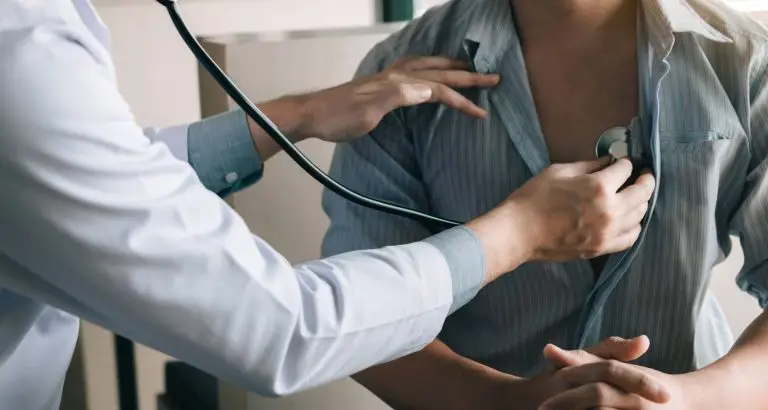
- History and examSwelling, breathing, weight, medicines, and a check of legs and lungs.
- Risk assessmentBlood pressure, diabetes, and past heart problems.
- Selected testingEchocardiogram, EKG, and blood tests as needed.
- Personalized planTreatment, home monitoring, and follow-up.
| Test | What it is | Why chosen | What it can or cannot show |
|---|---|---|---|
| Echocardiogram | Heart ultrasound | Measure pumping and valves | Shows ejection fraction and valve disease; not the artery lining |
| EKG | Electrical recording | Check rhythm | Finds atrial fibrillation; a normal EKG does not rule out heart failure |
| BNP or NT-proBNP | Blood test for a heart strain hormone | Gauge heart stress | Supports or argues against heart failure; kidney disease and weight affect levels |
| Leg vein ultrasound | Ultrasound of leg veins | One-sided swelling | Finds clots and leaky valves; does not assess the heart |
A normal result does not exclude every cause. Learn more about our cardiac diagnostic testing.
Where can I get congestive heart failure testing in Houston?
You can get congestive heart failure testing at Alliance Heart & Vascular, which sees patients in Pearland, with a Downtown Houston office coming soon. Echocardiograms, EKGs, and other heart tests are often done on site, so the same board-certified cardiologists who order your tests can review the results and plan next steps.
Congestive heart failure is an older term for heart failure with fluid buildup. We work with many major health insurance plans; call to verify yours or see our insurance plans page.
Swollen ankles and getting winded?
Our board-certified cardiologists can check for heart failure and other causes at our Pearland office.
How are swollen feet and shortness of breath treated based on the cause?
Treatment depends on what is causing the swelling and breathlessness. For heart failure, the 2022 ACC/AHA/HFSA guideline recommends water pills to remove extra fluid, long-term heart-protecting medicines matched to the heart failure type, and treatment of the underlying cause. Vein, kidney, liver, clot, and medicine causes each have their own treatment.
| Cause found | Typical approach |
|---|---|
| Fluid overload | Diuretics (water pills) to remove extra salt and water |
| Weak pump (reduced ejection fraction) | Four guideline-recommended medicine groups; sometimes an implanted device |
| Stiff pump (preserved ejection fraction) | Water pills, control of blood pressure and atrial fibrillation, and selected medicines |
| Venous insufficiency | Leg elevation, compression when appropriate, vein procedures |
| Deep vein thrombosis | Blood thinners started promptly |
| Kidney, liver, or medicine causes | Treating the organ problem, or a medicine change by your doctor |
Never start, stop, or change a heart medicine on your own.
How do daily weights help, and when should you call your doctor?
Daily weights help because fluid often builds up for days before swelling or breathlessness become obvious. Weigh yourself every morning the same way and write it down. Call your care team if you gain 2 to 3 pounds in a day or 5 pounds in a week, unless they give you different numbers.
- Same time: after using the bathroom, before eating.
- Same scale and clothing: on a hard floor.
- Log it: weight, swelling, pillows used, and breathing.
- Bring the log: share it at every visit.
See our new patient information for what to bring.
Where can I get heart failure care in Pearland and Downtown Houston?
Alliance Heart & Vascular evaluates swollen feet, shortness of breath, and heart failure at its Pearland office, with Downtown Houston coming soon. Board-certified cardiologists Dr. Rizwan Khan, Dr. Muhammad Waheed Raja, and Dr. Afaq Motiwala provide evidence-based testing, guideline-directed treatment, and long-term follow-up. New patients are welcome. Call (346) 614-0002 to schedule.
- Dr. Rizwan Khan, MD, FACC: board certified in cardiovascular disease, echocardiography, and nuclear cardiology.
- Dr. Muhammad Waheed Raja, MD, FACC, FASE: preventive cardiology and non-invasive imaging.
- Dr. Afaq Motiwala, MD, FACC, RPVI: interventional and endovascular cardiology, with a vascular ultrasound credential.
Pearland
10905 Memorial Hermann Drive, Suite 203
Pearland, TX 77584
Monday-Friday, 8:00 a.m.-4:30 p.m.
Downtown Houston Coming Soon
Will serve the Texas Medical Center, Midtown, and Downtown Houston.
Call (346) 614-0002 for opening updates. Patients are seen in Pearland now.
See all office locations and our general cardiology care.
What are the key takeaways about swollen feet and shortness of breath?
Swollen feet and shortness of breath together can signal heart failure, but veins, kidneys, liver, medicines, and blood clots can cause swelling too. Swelling that returns daily, weight gain, and breathlessness when lying flat deserve a cardiology visit. An echocardiogram is the key test, and guideline-based treatment helps many people feel better.
- Overnight relief is not proof: heart swelling often fades by morning and returns.
- One-sided swelling is urgent: it may be a blood clot.
- The scale is an early warning: fast gain usually means fluid.
- Help is local: cardiologists in Pearland.
What other questions do patients ask about swollen feet and shortness of breath?
Patients often ask whether swollen feet always mean heart failure, whether one swollen leg can be the heart, whether compression socks or less salt help, whether heart failure can improve, and which doctor to see. The short answers below follow current guidance, but your own answer depends on your exam and testing.
Do swollen feet always mean heart failure?
No. Most ankle swelling comes from veins, heat, long sitting or standing, or medicines. It is more concerning with breathlessness, fatigue, or fast weight gain.
Can heart failure cause swelling in only one leg?
Heart failure usually swells both legs. One swollen, painful leg suggests a clot or infection and needs same-day care.
Do compression socks help?
They help vein-related swelling but do not treat heart failure and are not right for everyone. Ask your cardiologist first.
How much salt is too much?
Guidelines advise avoiding excess sodium, but goals vary. Most sodium comes from packaged and restaurant foods.
Can heart failure get better?
For many people, yes. With guideline-directed treatment, symptoms often improve, though treatment usually continues long term.
Which doctor should I see?
A cardiologist is a physician who specializes in the heart and blood vessels. Call Alliance Heart & Vascular at (346) 614-0002.
Find out what is causing your swelling and breathlessness
Schedule an evaluation with Dr. Rizwan Khan, Dr. Muhammad Waheed Raja, or Dr. Afaq Motiwala at our Pearland office (Downtown Houston coming soon). Call (346) 614-0002 or request an appointment online.
Sources and further reading
- Heart Failure: Symptoms, NHLBI.
- Heart Failure: Diagnosis, NHLBI.
- Heart Failure: Treatment, NHLBI.
- Foot, Leg, and Ankle Swelling, MedlinePlus.
- Venous Insufficiency, MedlinePlus.
- Deep Vein Thrombosis, MedlinePlus.
- Heart Failure: Home Monitoring, MedlinePlus.
- 2022 AHA/ACC/HFSA Guideline for the Management of Heart Failure, Circulation (PubMed).