
What are heart palpitations at night?
Heart palpitations at night are moments when you suddenly notice your own heartbeat while resting or trying to sleep. They can feel like racing, pounding, fluttering, or a skipped beat. Most episodes are harmless and short, but frequent, long, or symptom-heavy episodes can signal a heart rhythm problem that needs testing.
A palpitation is a sensation, not a diagnosis. It tells you that you felt your heart, but not what your heart was actually doing. Patients usually describe one of these feelings:
- Racing: a fast heartbeat, often over 100 beats per minute, that may start suddenly.
- Pounding: strong, forceful beats you can feel in your chest, neck, or ears.
- Fluttering: a quick, light quivering feeling in the chest.
- Skipped or extra beats: a short pause followed by a hard “thump,” often called a flip-flop feeling.
- Irregular rhythm: beats that feel chaotic, with no steady pattern.
Our heart palpitations page covers daytime symptoms too. This article focuses on what happens after the lights go out.
Alliance Heart & Vascular
Expert heart care that keeps you moving.
Three board-certified cardiologists work as one team to find the cause of your symptoms and build a clear plan for your heart health.
- Dr. Rizwan KhanMD, FACC
- Dr. Muhammad Waheed RajaMD, FACC, FASE
- Dr. Afaq MotiwalaMD, FACC, RPVI
Why do heart palpitations feel worse at night?
Heart palpitations often feel worse at night because there is less noise and activity to distract you, so normal heartbeats become easier to notice. Lying down, especially on your left side, also brings the heart closer to the chest wall. Nighttime changes in nerve signals and breathing can trigger some rhythm problems too.
- Quiet surroundings: Without daytime distractions, your brain pays more attention to body sensations, including a heartbeat that was there all day.
- Body position: Lying on your left side can make each beat feel stronger. Turning onto your right side often softens the sensation.
- The vagus nerve: The vagus nerve is a nerve that slows the heart during rest and sleep. Shifts in its activity at night can set off some episodes of atrial fibrillation.
- Breathing pauses: Obstructive sleep apnea is a sleep disorder in which the airway repeatedly closes during sleep. Each pause lowers oxygen and stresses the heart, which can trigger irregular beats.
- Bedtime worry: Stress often surfaces when you finally lie still. It raises adrenaline, a stress hormone that speeds the heart.
What causes heart palpitations at night?
Most heart palpitations at night come from everyday triggers such as stress, anxiety, alcohol, nicotine, large late meals, dehydration, and some medicines. Harmless extra heartbeats are also very common. Less often, the cause is a heart rhythm disorder, a thyroid problem, anemia, or sleep apnea, which is why recurring episodes deserve an evaluation.
| Cause | How it can trigger palpitations | Usually harmless? |
|---|---|---|
| Stress and anxiety | Adrenaline speeds the heart and makes you more aware of each beat | Often, but do not assume it without checking the rhythm |
| Alcohol | Evening drinks, and binge drinking especially, can trigger extra beats and atrial fibrillation within hours | Not always — it is a known AFib trigger |
| Caffeine and energy drinks | Normal amounts are not linked to AFib, but they can make some people more aware of their heartbeat | Usually; very large amounts are riskier |
| Nicotine and vaping | Stimulates the heart and raises heart rate | Usually in the moment, but adds long-term heart risk |
| Decongestants and some medicines | Cold medicines, asthma inhalers, thyroid pills, and some diet pills can speed the heart | Review your medicine list with your doctor |
| Large or late meals, acid reflux | Fullness and reflux can create chest sensations that feel like a pounding heart | Usually |
| Dehydration or low electrolytes | Low potassium or magnesium can upset the heart’s electrical signals | Needs a blood test if episodes are frequent |
| Premature beats (PACs and PVCs) | Single early beats followed by a pause and a hard thump | Usually, when occasional |
Premature beats are extra heartbeats that start too early. A premature atrial contraction (PAC) begins in the heart’s upper chambers, and a premature ventricular contraction (PVC) begins in the lower chambers. Occasional PACs and PVCs are common in healthy people. Very frequent PVCs, however, can weaken the heart muscle over time, so they should be measured with a heart monitor.
Which heart rhythm problems cause palpitations at night?
The heart rhythm problems that most often cause nighttime palpitations are atrial fibrillation, supraventricular tachycardia, and frequent premature beats. These arrhythmias can come and go, so a normal daytime EKG does not rule them out. Atrial fibrillation matters most because it raises stroke risk and often starts during rest or sleep.
An arrhythmia is any heartbeat that is too fast, too slow, or irregular. The ones most linked to nighttime symptoms are:
- Atrial fibrillation (AFib): Atrial fibrillation is an irregular, often fast rhythm in which the heart’s upper chambers quiver instead of squeezing normally. According to the CDC, it is linked to about a fivefold higher risk of stroke. Paroxysmal AFib, meaning episodes that start and stop on their own, often begins at night. Learn more on our atrial fibrillation page.
- Supraventricular tachycardia (SVT): SVT is a sudden, very fast but regular heartbeat that starts above the heart’s lower chambers. It often switches on and off abruptly, like flipping a light switch.
- Atrial flutter: Atrial flutter is a fast, regular rhythm in the upper chambers that is closely related to AFib and carries a similar stroke risk.
- Frequent PVCs: Runs of early beats from the lower chambers can feel like repeated thumps or a heart that “stalls” and restarts.
- Bradycardia with pauses: Bradycardia is a heart rate slower than 60 beats per minute. A slower rate is normal during sleep for many people, but pauses with dizziness or fainting need testing.
Waking up with a racing or irregular heartbeat?
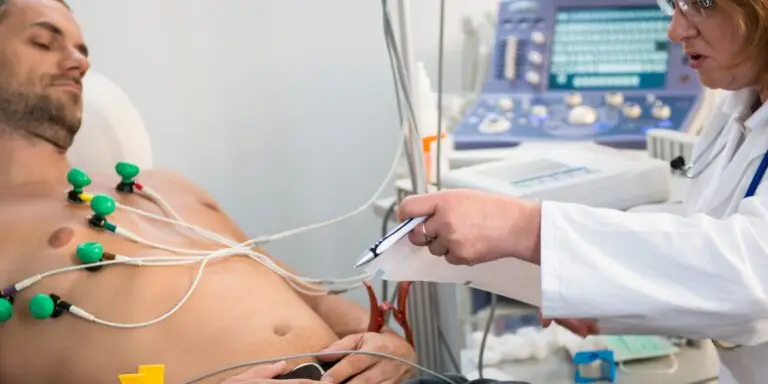
Our board-certified cardiologists use EKGs and wearable heart monitors to record what your heart is actually doing during nighttime episodes. Testing is often done on site at our Pearland office.
Can conditions outside the heart cause palpitations at night?
Yes. Several conditions outside the heart can cause palpitations at night, including an overactive thyroid, anemia, obstructive sleep apnea, low blood sugar, fever, and hormone changes during perimenopause, menopause, or pregnancy. Acid reflux and some medicines can also cause them. Treating the underlying condition often stops the palpitations without heart medication.
- Hyperthyroidism: Hyperthyroidism is an overactive thyroid gland that makes too much thyroid hormone, which speeds up the heart. A simple blood test checks for it.
- Anemia: Anemia is a low red blood cell count. It makes the heart pump faster to deliver enough oxygen to the body.
- Obstructive sleep apnea: Loud snoring, gasping, morning headaches, and daytime sleepiness are clues. Sleep apnea is common in people with AFib and often goes undiagnosed.
- Low blood sugar: Hypoglycemia is low blood sugar. It can happen overnight in people who take insulin or certain diabetes medicines, and it releases adrenaline.
- Hormone changes: Hot flashes and night sweats during perimenopause often come with a racing heart. Pregnancy also raises heart rate and blood volume.
- Panic attacks: A panic attack is a sudden wave of intense fear with physical symptoms such as a pounding heart, sweating, and shortness of breath. Nighttime panic attacks can wake people from sleep.
When are heart palpitations at night an emergency?
Heart palpitations at night are an emergency when they come with fainting or nearly fainting, chest pain or pressure, severe shortness of breath, confusion, or a very fast heartbeat that will not slow down. Call 911 right away. Do not drive yourself to the hospital, and do not wait to see if it passes.
Call 911 now if palpitations come with:
- Fainting or feeling like you are about to pass out
- Chest pain, pressure, or tightness
- Severe shortness of breath or trouble breathing lying flat
- A very fast heartbeat that does not settle after several minutes of rest
- Stroke signs: sudden face drooping, arm weakness, trouble speaking, or confusion
Some patterns are not emergencies but still call for a prompt, same-week appointment:
- Repeated waking: episodes that wake you from sleep more than once.
- Clear irregularity: a pulse that feels chaotic rather than simply fast.
- Known heart disease: palpitations in someone with a past heart attack, heart failure, or valve disease.
- Family history: a close relative who died suddenly or unexpectedly before age 50.
When should you see a cardiologist for heart palpitations at night?
See a cardiologist if heart palpitations at night happen several times a week, last more than a few minutes, feel irregular, wake you from sleep, or come with dizziness or shortness of breath. You should also book a visit if a smartwatch flags an irregular rhythm or you have heart disease, high blood pressure, or diabetes.
A cardiologist is a physician who specializes in diagnosing and treating diseases of the heart and blood vessels. Use this checklist to decide whether it is time to book:
- Frequency: episodes happen several nights a week or are becoming more frequent.
- Duration: episodes last longer than a few minutes.
- Rhythm: your pulse feels irregular or chaotic, not just fast.
- Symptoms: you also feel lightheaded, short of breath, unusually tired, or have chest discomfort.
- Wearable alert: your smartwatch or fitness tracker has flagged possible atrial fibrillation.
- Risk factors: you are 65 or older or have high blood pressure, diabetes, sleep apnea, thyroid disease, or heart or valve disease.
- Family history: a relative has an inherited heart rhythm condition, a weakened heart muscle, or sudden cardiac death at a young age.
How do cardiologists diagnose heart palpitations at night?
Cardiologists diagnose heart palpitations at night by matching your symptoms to a recording of your heart rhythm. The visit includes a detailed history, a physical exam, and an EKG. Many patients then wear a heart monitor for one to 30 days to catch nighttime episodes, along with blood tests and sometimes an echocardiogram.
How a palpitation evaluation usually works
- ListenYour cardiologist reviews when episodes start, how long they last, and what surrounds them.
- RecordAn EKG and a wearable monitor capture your rhythm, including overnight.
- CheckBlood tests and imaging look for thyroid, anemia, electrolyte, or structural causes.
- PlanYou get a clear diagnosis and a treatment plan matched to the cause.
| Test | What it is | What it helps find |
|---|---|---|
| EKG | An EKG (electrocardiogram) is a quick, painless test that records the heart’s electrical activity through small stickers on the chest. | Your rhythm at that moment and signs of past heart strain or damage |
| Holter monitor | A Holter monitor is a small wearable recorder that tracks every heartbeat for 24 to 48 hours. | Episodes that happen daily or nightly |
| Patch or event monitor | A patch or event monitor is a wearable device worn for up to about 30 days that records the rhythm continuously or when you press a button. | Episodes that happen a few times a week or less |
| Implantable loop recorder | An implantable loop recorder is a tiny device placed just under the skin of the chest that can record the rhythm for years. | Rare episodes and unexplained fainting |
| Echocardiogram | An echocardiogram is an ultrasound imaging test that shows the heart’s size, valves, and pumping strength. | Structural heart disease that can lead to arrhythmias |
| Stress test | A stress test checks how your heart responds to exercise or medicine that makes it work harder. | Rhythm changes with exertion and blocked heart arteries |
| Blood tests | Lab tests for thyroid hormone, red blood cell count, and electrolytes such as potassium and magnesium. | Non-heart causes that are easy to treat |
Bring a written log of each episode: the date, time, what you were doing, how long it lasted, and how your pulse felt. If your smartwatch recorded an ECG strip, bring that too. Major cardiology guidelines note that smartwatch pulse alerts can prompt testing, but a doctor still needs to confirm the rhythm on a medical-grade recording.
How are heart palpitations at night treated?
Treatment for heart palpitations at night depends on the cause. Harmless extra beats often need only reassurance and trigger changes, such as limiting alcohol and improving sleep. Thyroid problems, anemia, and sleep apnea are treated directly. Confirmed arrhythmias may need medicine, blood thinners to prevent stroke, or a procedure called catheter ablation.
| Cause found | Typical treatment |
|---|---|
| Occasional PACs or PVCs | Reassurance and trigger control; a beta-blocker (a medicine that slows and steadies the heart) if symptoms are bothersome |
| Atrial fibrillation | Medicines to control heart rate or rhythm, a blood thinner when stroke risk is high, catheter ablation for some patients, and control of blood pressure, weight, alcohol, and sleep apnea |
| SVT | Vagal maneuvers (simple bearing-down techniques your doctor teaches you), medicine, or catheter ablation, which can often cure it |
| Frequent PVCs affecting heart function | Medicine or catheter ablation, with follow-up imaging of heart strength |
| Thyroid, anemia, or electrolyte problems | Treating the underlying condition, which often stops the palpitations |
| Obstructive sleep apnea | A sleep study and CPAP, a bedside machine that keeps the airway open during sleep |
Catheter ablation is a minimally invasive procedure that uses heat or cold energy, delivered through a thin tube placed in a vein, to block the faulty electrical pathway causing the arrhythmia. When ablation is the right next step, our team coordinates referral to a heart rhythm specialist (electrophysiologist) and continues your long-term care afterward. Never start, stop, or change a heart medicine on your own.
What can you do to reduce heart palpitations at night?
To reduce heart palpitations at night, limit alcohol and nicotine, avoid large late meals, stay hydrated, cut back on caffeine if it makes you jittery, and wind down before bed with slow breathing. Try sleeping on your right side and write down when episodes happen. These steps help with harmless palpitations but never replace a cardiology evaluation.
- Limit evening alcohol: alcohol is one of the most common triggers of nighttime AFib, even in moderate amounts.
- Skip nicotine and vaping: both stimulate the heart and raise long-term heart risk.
- Eat dinner earlier and lighter: give your stomach two to three hours before lying down to reduce reflux.
- Hydrate through the day: mild dehydration makes the heart beat faster and can lower electrolytes.
- Watch your caffeine: normal amounts are not linked to AFib, but cutting back after noon can help if you notice your heartbeat more on high-caffeine days.
- Slow your breathing: breathe in for four seconds and out for six seconds for a few minutes to calm adrenaline.
- Change position: rolling onto your right side often makes heartbeats less noticeable.
- Check and record: count your pulse for 30 seconds, note whether it feels steady or irregular, and save any smartwatch ECG.
Where can you get heart palpitation care in Pearland and Downtown Houston?
Alliance Heart & Vascular evaluates heart palpitations at night at its Pearland office, with Downtown Houston coming soon. Board-certified cardiologists Dr. Rizwan Khan, Dr. Muhammad Waheed Raja, and Dr. Afaq Motiwala provide evidence-based rhythm testing, diagnosis, and long-term treatment under one roof. New patients are welcome. Call (346) 614-0002 to schedule an appointment.
- Dr. Rizwan Khan, MD, FACC: board certified in cardiovascular disease, echocardiography, and nuclear cardiology, with fellowship training at Loyola University Medical Center. He cares for patients with chest pain, high blood pressure, coronary artery disease, and heart failure.
- Dr. Muhammad Waheed Raja, MD, FACC, FASE: board certified in cardiovascular disease and internal medicine, with fellowship training at Tulane University School of Medicine. He focuses on preventive cardiology and non-invasive cardiac imaging.
- Dr. Afaq Motiwala, MD, FACC, RPVI: board certified in interventional cardiology, cardiovascular disease, endovascular medicine, and internal medicine, with more than 14 years of experience in general and interventional cardiology.
Pearland
10905 Memorial Hermann Drive, Suite 203
Pearland, TX 77584
Monday–Friday, 8:00 a.m.–4:30 p.m.
Downtown Houston Coming Soon
Will serve the Texas Medical Center, Midtown, and Downtown Houston.
Call (346) 614-0002 for opening updates. Patients are seen in Pearland now.
Whether another physician referred you or you are looking for a cardiologist on your own, our team can help with scheduling, insurance questions, and what to bring. See our new patient information and insurance plans.
What are the key takeaways about heart palpitations at night?
Heart palpitations at night are common and usually harmless, but they should not be ignored when they are frequent, long, or irregular, or when they come with other symptoms. The cause can only be confirmed by recording your heart rhythm during an episode. Emergency symptoms such as fainting or chest pain always need a 911 call.
- Quiet makes heartbeats louder: lying still at night makes a normal heartbeat easier to notice.
- Triggers are common: stress, alcohol, nicotine, late meals, and some medicines cause many episodes.
- AFib is the one to rule out: it often starts at night and raises stroke risk.
- Recording beats guessing: an EKG and a wearable monitor show what your heart is actually doing.
- Help is local: board-certified cardiologists in Pearland can test and treat the cause.
What other questions do patients ask about palpitations at night?
Patients most often ask whether nighttime palpitations are dangerous, whether anxiety can cause them, whether AFib can happen only at night, how to read a smartwatch alert, and which doctor to see. The short answers below reflect current cardiology guidance. Your own answer depends on your symptoms, history, and rhythm testing.
Are heart palpitations at night dangerous?
Usually not. Most are harmless awareness of a normal heartbeat or occasional extra beats. They need evaluation when they are frequent, last minutes or longer, feel irregular, or come with dizziness, shortness of breath, or chest discomfort.
Why does my heart race when I lie down?
Lying down removes daytime distractions and brings the heart closer to the chest wall, so a normal heartbeat feels stronger. A heartbeat that suddenly jumps to a fast rate at rest, however, can be an arrhythmia and should be recorded.
Can anxiety cause heart palpitations at night?
Yes. Stress hormones raise your heart rate and make you more aware of it, often at bedtime. Heart rhythm problems can also feel like anxiety, so recurring episodes should be checked with a heart monitor before they are blamed on stress.
Can AFib happen only at night?
Yes. Paroxysmal atrial fibrillation often starts during rest or sleep and may stop on its own by morning. Untreated sleep apnea makes nighttime AFib more likely, which is why your cardiologist may ask about snoring.
Can sleep apnea cause heart palpitations?
Yes. Breathing pauses during sleep lower oxygen levels and strain the heart, which can trigger extra beats and atrial fibrillation. Treating sleep apnea, often with CPAP, can reduce these episodes.
Should I trust my smartwatch’s irregular rhythm alert?
Take it seriously, but not as a diagnosis. Smartwatch pulse alerts can point to possible AFib, but a doctor needs to confirm the rhythm with an EKG or a medical-grade monitor. Bring any saved recordings to your appointment.
What is a normal heart rate while sleeping?
For most adults, the heart rate during sleep drops below the awake resting range of 60 to 100 beats per minute, sometimes into the 50s or lower in healthy, active people. A slow rate is a concern mainly when it comes with pauses, dizziness, or fainting.
Which doctor should I see for heart palpitations at night?
A cardiologist is the specialist for heart palpitations. You can start with your primary care doctor, or schedule directly with Alliance Heart & Vascular by calling (346) 614-0002. Some insurance plans require a referral, so check your plan first.
Get answers about your nighttime palpitations
Do not lose more sleep wondering what your heart is doing. Schedule an evaluation with Dr. Rizwan Khan, Dr. Muhammad Waheed Raja, or Dr. Afaq Motiwala at our Pearland office (Downtown Houston coming soon). Call (346) 614-0002 or request an appointment online.
Sources and further reading
- Heart palpitations, MedlinePlus Medical Encyclopedia, U.S. National Library of Medicine.
- Arrhythmias, National Heart, Lung, and Blood Institute.
- About Atrial Fibrillation, Centers for Disease Control and Prevention.
- 2023 ACC/AHA/ACCP/HRS Guideline for the Diagnosis and Management of Atrial Fibrillation, Circulation.
- Sleep Apnea, National Heart, Lung, and Blood Institute.