What causes a fluttering feeling in the heart?
A fluttering heart, known as palpitations, can be triggered by high stress, excessive caffeine, or dehydration. However, it can also indicate an underlying electrical issue in the heart, such as Atrial Fibrillation (AFib), where the upper chambers beat irregularly and out of sync with the lower chambers.
Palpitations are the feeling that your heart is fluttering, pounding, racing or skipping. Common triggers include:
- Stress and anxiety: adrenaline speeds the heart and makes extra beats more likely.
- Caffeine, alcohol and nicotine: energy drinks, strong coffee and vaping are frequent culprits.
- Dehydration and poor sleep: both can make the heart more irritable.
- Medical conditions: an overactive thyroid, anemia (a low red blood cell count), fever and some medicines.
- Heart rhythm problems: an arrhythmia is a heartbeat that is too fast, too slow or irregular.
For more triggers and rhythm types, read racing, fluttering or skipping heartbeats.
Alliance Heart & Vascular
Expert heart care that keeps you moving.
Three board-certified cardiologists work as one team to find the cause of your symptoms and build a clear plan for your heart health.
- Dr. Rizwan KhanMD, FACC
- Dr. Muhammad Waheed RajaMD, FACC, FASE
- Dr. Afaq MotiwalaMD, FACC, RPVI
Why does my heart flutter instead of beating normally?
Your heart flutters when an electrical signal fires early or out of order. A single early beat feels like a flip or thump. A short burst of fast, regular beats feels like racing. A chaotic, irregular rhythm, as in AFib, often feels like a quivering or fluttering that does not settle.
Your heartbeat is normally set by the sinus node, the heart's natural pacemaker. When another spot fires first, you may notice it.
| What you feel | Possible rhythm | Typical pattern |
|---|---|---|
| A single flip, thump or pause | Extra beats (PACs or PVCs) | Seconds at a time, often at rest |
| Sudden fast, steady racing | Supraventricular tachycardia (SVT) | Starts and stops abruptly |
| Irregular quivering | Atrial fibrillation (AFib) | Uneven pulse, minutes to days |
These patterns are discussion aids, not a diagnosis. Only a recording of the rhythm during symptoms can confirm the cause.
What should I do when my heart starts fluttering?
When your heart starts fluttering, stop and sit down, breathe slowly, and check for danger signs. If none are present, check your pulse, note the time and what you were doing, and save a smartwatch ECG if you have one. That record can help your cardiologist match the feeling to a rhythm.
- Sit or lie down: this lowers the risk of falling if you feel lightheaded.
- Breathe slowly: it helps you stay calm, though it will not stop every rhythm problem.
- Check for red flags: chest pain, fainting, severe breathlessness or stroke signs mean call 911.
- Check your pulse: count at your wrist for 30 seconds, double it, and note whether it feels steady or uneven.
- Note the time: when it started, how long it lasted and what you were doing.
- Save a smartwatch ECG: if your watch records a single-lead ECG, take a reading during the episode and bring it to your visit.
A watch reading is a clue, not a diagnosis. If episodes wake you up, see why palpitations happen at night.
When should I worry about my heart beating fast for no reason?
You should seek immediate medical evaluation if your rapidly beating heart is accompanied by chest pain, dizziness, severe shortness of breath, or fainting. If the fluttering happens frequently or lasts for several minutes at a time, schedule a consultation with an AFib treatment specialist to rule out an arrhythmia.
- Call 911 now: fluttering with chest pain, fainting, severe breathlessness, confusion or stroke signs.
- Get same-day care: a fast heartbeat that will not settle with rest, new dizziness, or worsening symptoms in someone already diagnosed with AFib. Go to urgent care or an emergency room rather than waiting for a routine visit.
- Book a cardiology visit: brief fluttering that keeps coming back, episodes of several minutes that settle on their own, or a smartwatch AFib alert without other symptoms.
Does a normal EKG mean the fluttering is nothing?
No. A normal EKG means your heart rhythm was normal during the few seconds of the test. Fluttering that comes and goes is often missed because it is not happening in the office. A longer heart monitor is the usual next step when symptoms keep returning, even if the EKG looked fine.
- Timing matters: a standard EKG records about 10 seconds and usually misses occasional episodes.
- Intermittent AFib: AFib that comes and goes is called paroxysmal AFib. See can AFib come and go?
- Still useful: a normal EKG helps rule out some problems and guides what to test next.
Related reading
Wondering whether your fluttering could be AFib? Read AFib symptoms: signs of an irregular heartbeat.
How do doctors test for heart palpitations and AFib?
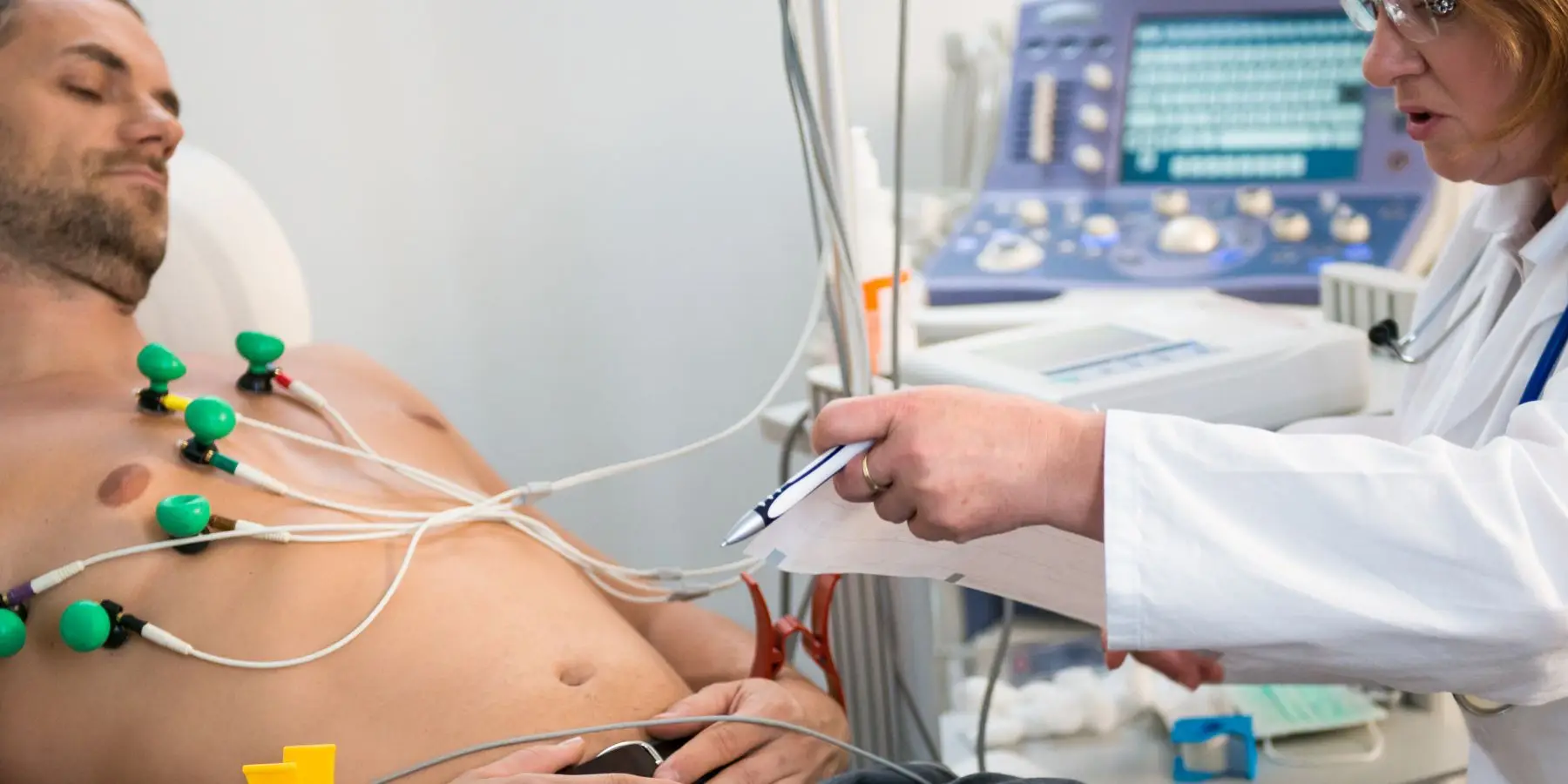
Palpitations are evaluated using an Electrocardiogram (EKG) to capture the heart's electrical activity. Because fluttering can be unpredictable, your cardiologist may prescribe a Holter monitor or ambulatory rhythm monitor, which you wear for 24 hours to 30 days to record irregular heartbeats as they happen in real-time.
How a palpitation evaluation usually works
- History and examHow the flutter feels, how often it happens and what triggers it.
- Risk assessmentBlood pressure, medicines, caffeine, alcohol and thyroid health.
- Selected testingAn EKG, blood tests, an echocardiogram or a heart monitor.
- Personalized planResults matched to your symptoms guide next steps.
| Test | How long | Why chosen | What it can or cannot show |
|---|---|---|---|
| Resting EKG | About 10 seconds | First test for almost everyone | The rhythm at that moment only |
| Holter monitor | 24–48 hours | Daily symptoms | Records every beat; too short for weekly episodes |
| Extended Holter or patch | Up to about 14 days | Symptoms every few days | Records continuously; most do not send results in real time |
| Event monitor | Up to 30 days | Symptoms a few times a month | Saves the rhythm when you press a button or it detects a problem; may miss very brief episodes |
| Implantable loop recorder | Up to a few years | Rare episodes or unexplained fainting | A tiny device placed under the skin; catches rare events but needs a minor procedure |
An echocardiogram, an ultrasound of the heart, may be added. See echocardiogram testing.
How do I get a Holter monitor test in Houston?
To get a Holter monitor test in Houston, start with a cardiology visit. Your cardiologist reviews your symptoms, records an EKG, and chooses a monitor length based on how often episodes happen. You wear the monitor during normal life, keep a symptom diary, and return it so the recording can be reviewed with you.
- Book a visit: some insurance plans require a referral, so check our insurance plans page.
- Get a baseline EKG: this checks your resting rhythm.
- Choose the length: daily episodes suit a 24–48 hour Holter; weekly or monthly episodes need a patch or event monitor.
- Wear it: live normally and follow the showering instructions.
- Keep a diary: note the time and what you felt, and press the event button if your device has one.
- Review results: your cardiologist matches the recording to your diary.
Learn more about Holter and heart monitoring at our offices.
Tired of guessing what your heart is doing?
Our board-certified cardiologists can record your rhythm during everyday life and explain what the fluttering means, at our Pearland office.
How is AFib and heart fluttering treated in Houston?
Treatment depends on the cause. Harmless extra beats often need only reassurance and trigger changes. AFib treatment in Houston usually focuses on three goals: controlling the heart rate, restoring or keeping a normal rhythm when helpful, and lowering stroke risk. Some patients are referred to an electrophysiologist for procedures such as catheter ablation.
| Cause found | Typical approach |
|---|---|
| Extra beats (PACs or PVCs) | Reassurance and trigger changes; medicine if symptoms are frequent |
| Thyroid, anemia or medicine effects | Treating the underlying condition or adjusting the medicine |
| SVT | Maneuvers taught by your doctor, medicines, or an electrophysiology referral |
| AFib or atrial flutter | Rate- and rhythm-control medicines, blood thinners when stroke risk calls for them, cardioversion (a controlled shock that resets the rhythm) |
| AFib not controlled by medicines | Referral to an electrophysiologist, a heart rhythm specialist, to discuss catheter ablation |
Catheter ablation is a procedure that scars tiny areas of heart tissue to block faulty signals. Alliance Heart & Vascular diagnoses and manages AFib and refers patients who may benefit from ablation to an electrophysiologist. See our atrial fibrillation care page. Never change heart medicines on your own.
What should I track before my cardiology visit?
Before your visit, track when each flutter starts, how long it lasts, how it feels, your pulse if you checked it, and what you were doing. Bring smartwatch ECG recordings, a list of your medicines and supplements, and your caffeine and alcohol habits. This record helps your cardiologist choose the right test.
- Timing: date, time and whether it lasted seconds, minutes or hours.
- Feeling and pulse: a flip, a race or an uneven quiver, and the rate if you counted.
- Triggers: coffee, alcohol, stress or poor sleep.
- Questions to ask: “Which monitor fits my pattern?” and “What is my stroke risk if this is AFib?”
First visit? See our new patient information.
Where can I get heart rhythm care in Pearland and Downtown Houston?
Alliance Heart & Vascular evaluates heart fluttering, palpitations and AFib at its Pearland office, with Downtown Houston coming soon. Board-certified cardiologists Dr. Rizwan Khan, Dr. Muhammad Waheed Raja and Dr. Afaq Motiwala provide EKGs, heart monitoring, echocardiograms and ongoing rhythm care. New patients are welcome. Call (346) 614-0002 to schedule.
- Dr. Rizwan Khan, MD, FACC: board certified in cardiovascular disease, echocardiography and nuclear cardiology.
- Dr. Muhammad Waheed Raja, MD, FACC, FASE: board certified in cardiovascular disease and internal medicine; preventive cardiology and non-invasive imaging.
- Dr. Afaq Motiwala, MD, FACC, RPVI: board certified in interventional cardiology, cardiovascular disease, endovascular medicine and internal medicine.
Pearland
10905 Memorial Hermann Drive, Suite 203
Pearland, TX 77584
Monday–Friday, 8:00 a.m.–4:30 p.m.
Downtown Houston Coming Soon
Will serve the Texas Medical Center, Midtown, and Downtown Houston.
Call (346) 614-0002 for opening updates. Patients are seen in Pearland now.
See all office locations, our heart palpitations page and our guide to abnormal heart rhythms. We work with many major health insurance plans; call to verify your specific plan.
What are the key takeaways about a fluttering heart?
A fluttering heart is often triggered by stress, caffeine or harmless extra beats, but it can signal AFib or another arrhythmia. Check for red flags first, then record your pulse and symptoms. A normal EKG does not end the search, and a heart monitor matched to how often episodes happen usually finds the answer.
- Red flags first: chest pain, fainting or severe breathlessness mean call 911.
- Record the moment: pulse, time, triggers and a smartwatch ECG all help.
- Match the monitor to the pattern: daily episodes suit a Holter; rare ones need longer monitoring.
- AFib is treatable: rate control, rhythm control and stroke prevention are the main goals.
What other questions do patients ask about heart fluttering?
Patients often ask whether fluttering can be harmless, whether anxiety alone can cause it, whether a smartwatch can detect AFib, what a Holter is like to wear, and whether they need a referral. The short answers below reflect general cardiology guidance; your own answer depends on your symptoms and testing.
Can heart fluttering be harmless?
Yes. Occasional extra beats are common and usually not dangerous. Frequent or long episodes should still be checked, because the feeling alone cannot tell a harmless beat from AFib.
Can anxiety cause a fluttering heart?
Yes. Stress hormones can trigger a fast heartbeat and extra beats. But anxiety and arrhythmias can happen together, so new or frequent fluttering deserves an evaluation.
Can a smartwatch detect AFib?
Some watches record a single-lead ECG and flag possible AFib. An alert is a reason to see a doctor, not a diagnosis, and a normal reading does not rule out every rhythm problem.
Is AFib dangerous?
AFib is not usually immediately life threatening, but it raises stroke risk and can weaken the heart over time if not managed. That is why diagnosis and a stroke risk assessment matter.
Can I shower with a Holter monitor?
Most standard Holters must stay dry, while many patch monitors allow brief showers. Follow your device instructions.
Do I need a referral to see a cardiologist for palpitations?
Not always. Some insurance plans require one. Call (346) 614-0002 to check what your plan needs.
Find out what is behind the flutter
Schedule an evaluation at our Pearland office (Downtown Houston coming soon). Call (346) 614-0002 or request an appointment online.
Sources and further reading
- Heart palpitations, MedlinePlus Medical Encyclopedia.
- Atrial fibrillation and atrial flutter, MedlinePlus Medical Encyclopedia.
- Arrhythmias: Diagnosis, National Heart, Lung, and Blood Institute.
- Electrocardiogram, MedlinePlus Medical Encyclopedia.
- Holter monitor (24h), MedlinePlus Medical Encyclopedia.
- Cardiac event monitors, MedlinePlus Medical Encyclopedia.
- Atrial Fibrillation: Treatment, National Heart, Lung, and Blood Institute.